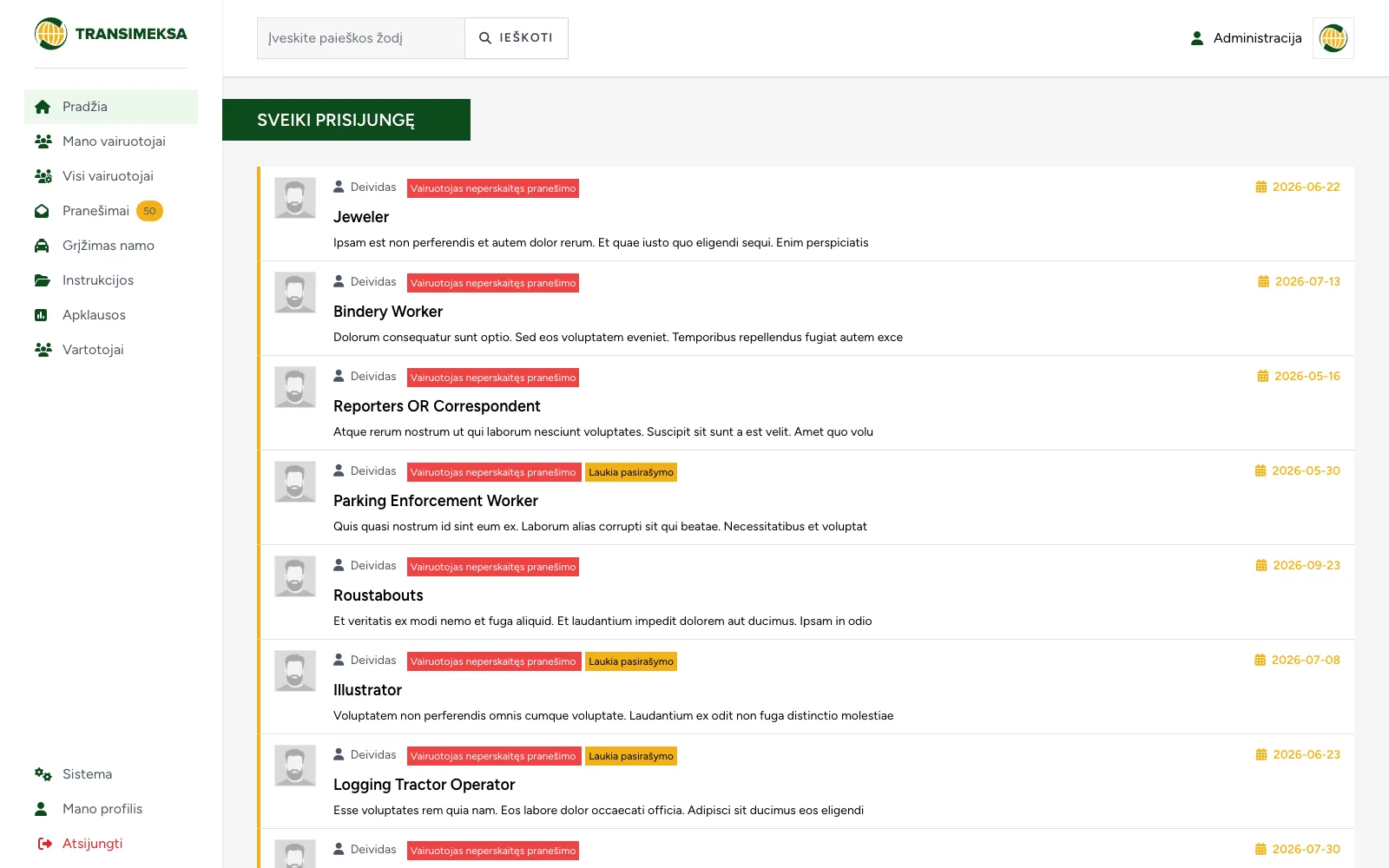
Driver communication and document management system
Instructions, documents and surveys for drivers, with a dedicated mobile interface for drivers and a separate one for managers.
Process digitalisation where today the work is done by spreadsheets, email and people's memory.
A business management system is an internal application where a company's day-to-day work happens: orders, resources, documents, deadlines and responsibilities. Unlike an ERP, it does not try to replace the company's entire infrastructure. It digitalises specific processes and connects to the systems that already work.
A spreadsheet is an excellent tool as long as one person uses it. Problems begin when the file travels by email, when a second version appears, when nobody remembers which row is correct. A system turns those same tables into a shared database with permissions, history and rules.
A new system should not replace your accounting, it should talk to it. We build connections with any software that has an API or a file exchange interface, including Lithuanian accounting systems such as B1, Rivilė, Directo and Agnum, or others. Invoices, clients and payment statuses are transferred so that data is never entered twice. More in integrations and automation.
ERP implementation is a discipline of its own, with its own risks and projects that run for years. We do something narrower and more predictable: we take a specific process that hurts, digitalise it and connect it to your existing infrastructure. If you need a full ERP implementation, it is worth talking to the ERP vendor's partners.
| Criterion | Spreadsheets | ERP implementation | Custom system |
|---|---|---|---|
| Time to launch | Immediate | Months or years | Weeks or months |
| Scope | A single process | The whole company | Selected processes |
| Risk | Errors and version confusion | High, affects all operations | Limited, grows in stages |
| Data integrity | Copies and duplicates | Single source of truth | Single source of truth |
| Accounting | Kept separately | Inside the system | Existing software, connected via API |
| Customisation | Unlimited but fragile | Within the vendor model | Built around your process |
An ERP is a single product covering accounting, warehousing, production and HR according to the vendor's model. A business management system, in this context, is narrower and more specific: it digitalises the processes that currently run in spreadsheets or email, and connects to the accounting software you already use rather than trying to replace it.
When a process can no longer be managed in a spreadsheet without errors; when people wait on each other because data sits on someone's computer; when management only sees the figures after the month has ended; or when growing volumes mean hiring people just to enter data.
No. The usual scenario is that accounting stays where it is and the new system connects to it. This avoids the riskiest part of the project and the need to retrain your accountants.
Often, yes. Digitalisation and artificial intelligence funding calls regularly cover process digitalisation and custom software development. What matters is that the project makes business sense even without the funding, and that the application is based on a realistic scope.
That is exactly what the discovery phase is for. During it, processes are mapped and documented together with the staff who carry them out. The result is useful even if you decide not to build the system.
Instructions, documents and surveys for drivers, with a dedicated mobile interface for drivers and a separate one for managers.
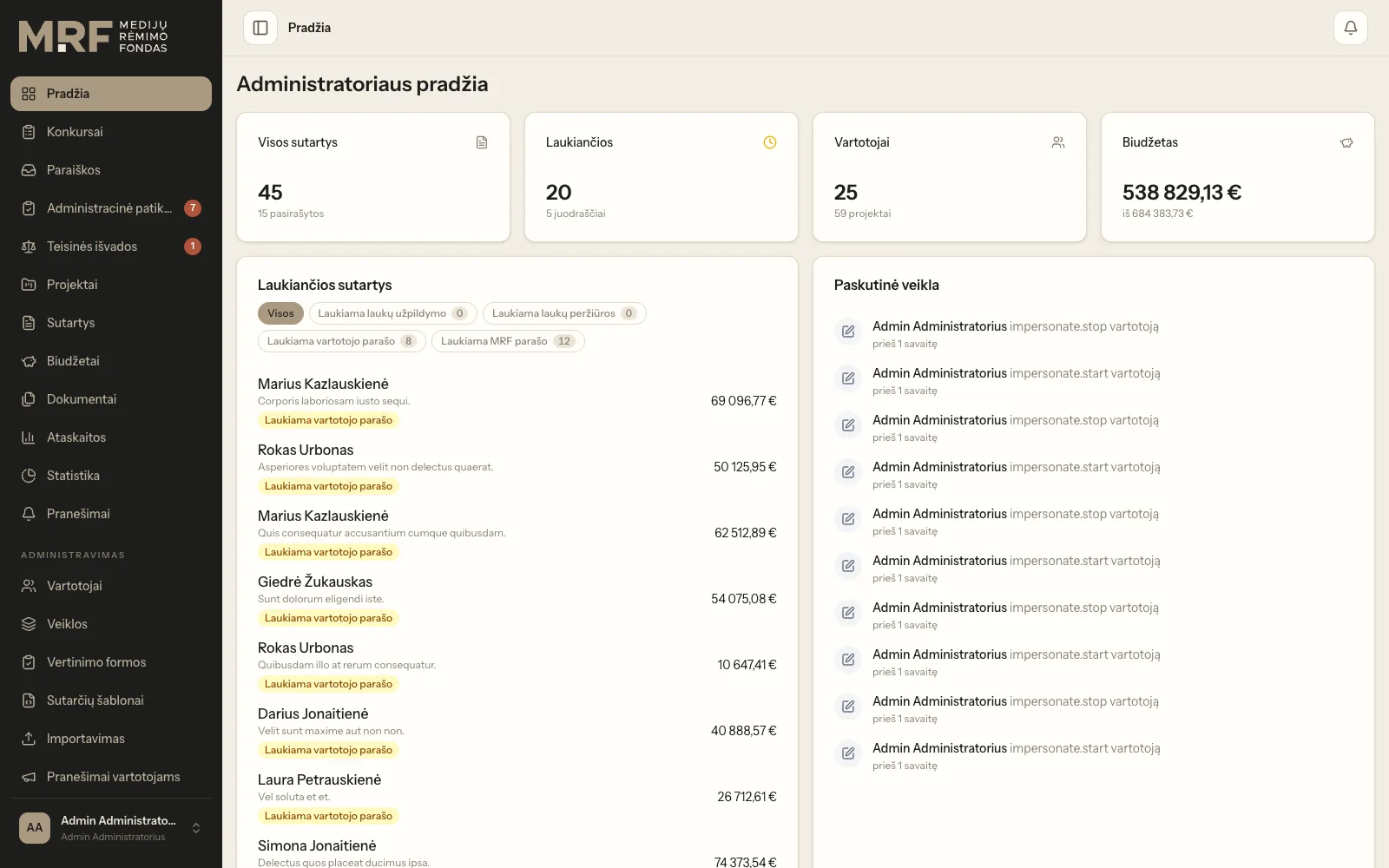
Application intake, expert assessment, budget approval and electronic contract signing in a single workflow.
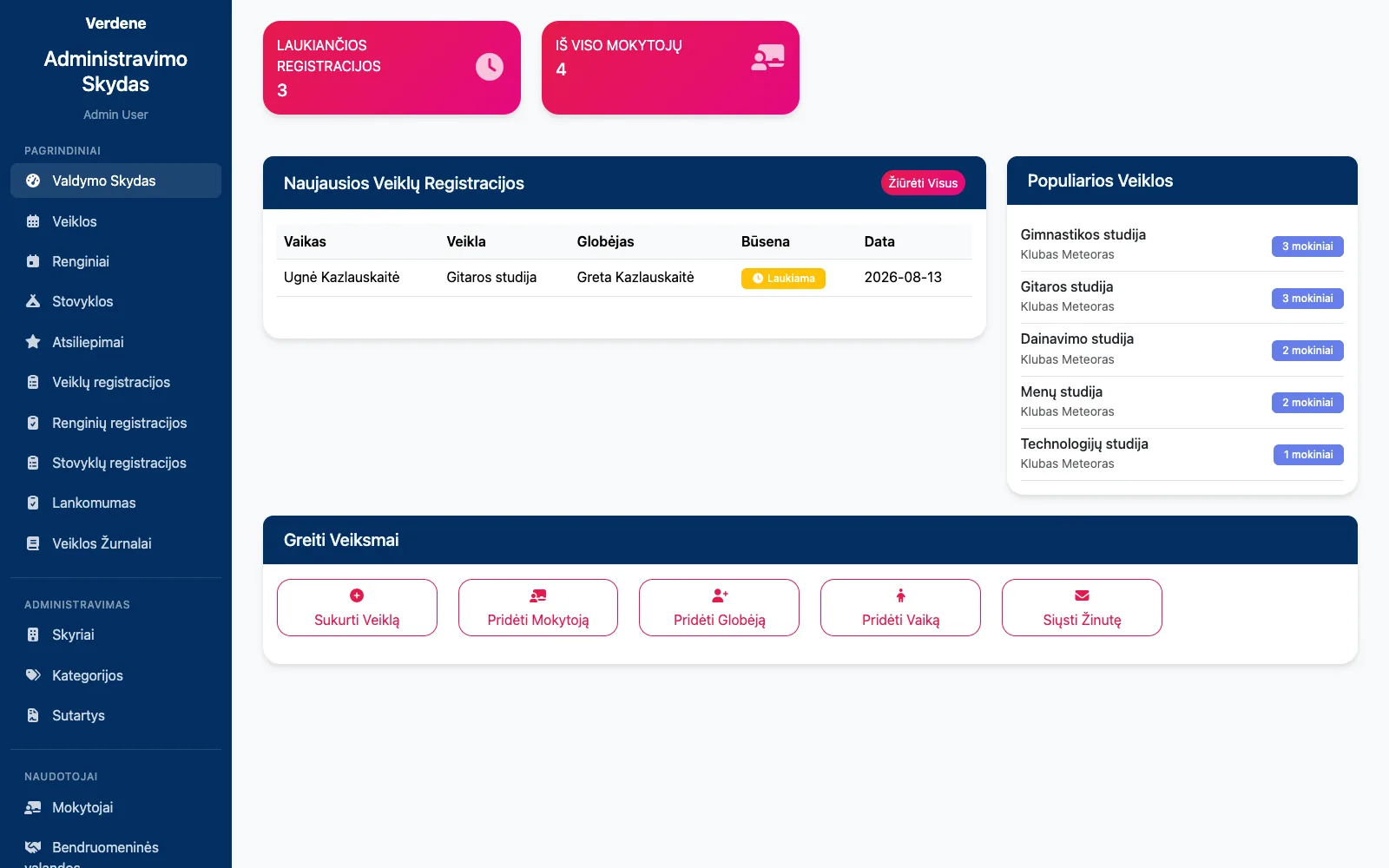
Club and camp registrations, attendance, contracts with parents and their termination in one system.
Let's start there. We will get back to you with questions and an initial direction within one business day.
Or directly: info@desamedia.lt · +370 686 59999