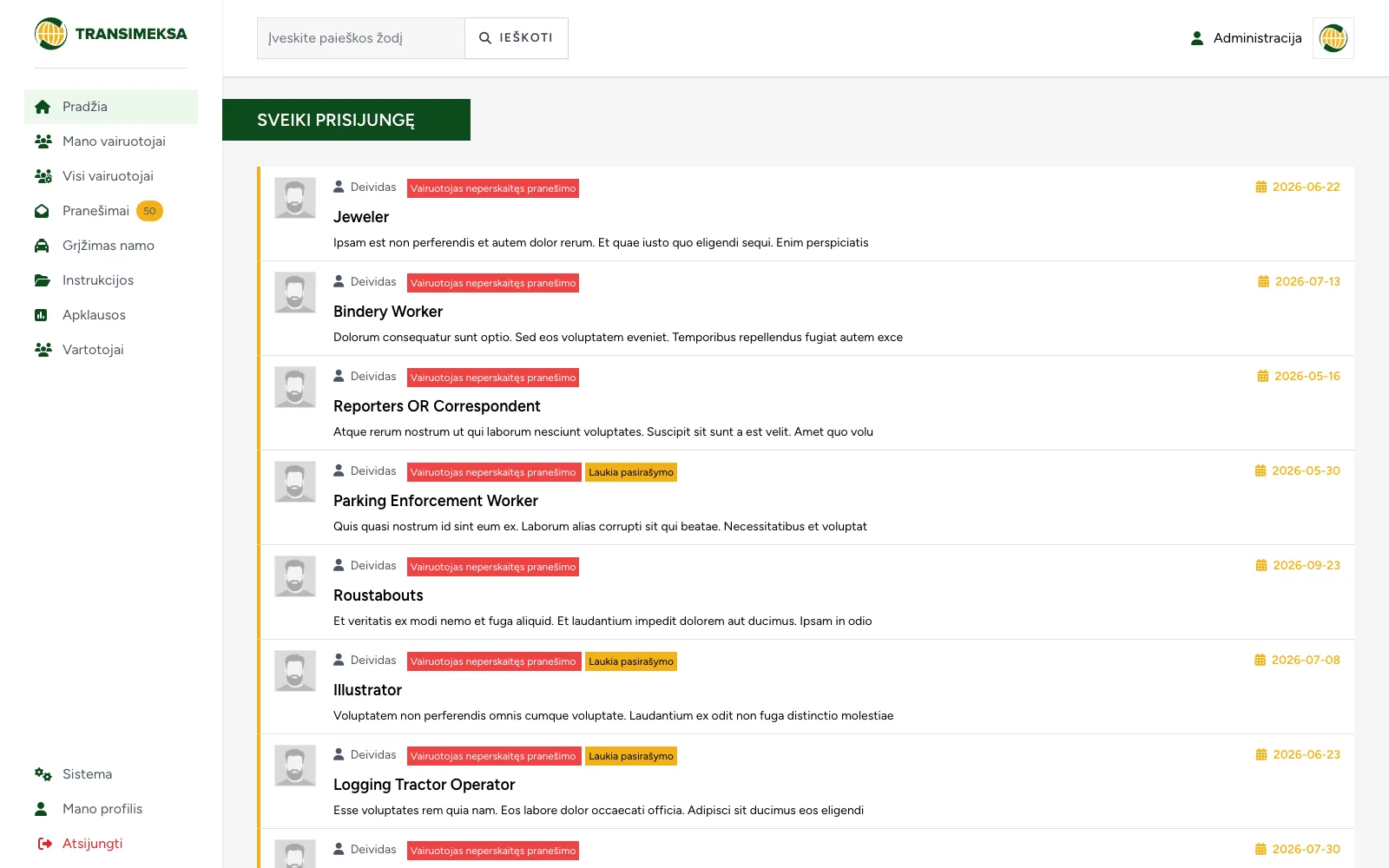
Driver communication and document management system
Instructions, documents and surveys for drivers, with a dedicated mobile interface for drivers and a separate one for managers.
Club and camp registrations, attendance, contracts with parents and their termination in one system.
ProblemRegistrations for clubs and camps were collected through forms, attendance was marked on paper, and contracts with parents were prepared by hand for each child. Data about the same participant was kept in several places.
SolutionWe built a platform with activity and camp registrations, an attendance register and a contracts module: the contract is generated from participant data and signed electronically, and termination has its own workflow. It also manages website content, events and notices to parents.
A children's activity organisation handles registrations for clubs and camps, daily attendance and contracts with parents all at once. With a few dozen participants, spreadsheets are enough. Once there are more than a hundred, duplicates appear: the same child is entered in different ways, and a contract is signed under an old name.
On top of that, social activities have to be accounted for, which commercial products usually do not cater for. Some activities come with requirements whose fulfilment must be recorded and reported.
We started by sorting out participant data. It sounds technical, but this is where the main problem lay: registration, attendance and the contract described the same child in three different records. Once all information about a child was merged into a single record with history, a whole class of errors disappeared.
Activities and camps. An activity belongs to a category and a branch, and has its own schedule and number of places. Camps are handled separately because registration for them works differently.
Registrations. Parents register a child through a form, and the status of each registration is visible in the system. Free places are tracked automatically.
Attendance register. Attendance is marked by activity and date. This is the simplest part of the system, but it is used by the most people, so we worked hard to make it fast: marking a whole group should take a few seconds.
Contracts. The contract is generated from participant data and signed electronically. Termination is modelled separately, with its own workflow, reason and date. In practice contracts are terminated often, and off-the-shelf products usually leave this case unhandled.
Social activity records. Requirements and records of their fulfilment are stored separately, so a report can be prepared without collecting data by hand.
The system also manages the organisation's website content: pages, articles, events, documents and notices to parents.
The child is not tied to a parent account. The child has no account of their own, and one parent can register several children. If child and parent data were stored together, the system would not survive the first divorce or change of guardian.
Termination as a separate process. A termination has a date, a reason and a document. If a contract were simply marked as inactive, after six months nobody would remember why it ended.
Website content in the same system. The organisation does not need two admin interfaces. An event published on the website and the registration for it are one and the same record.
When an organisation works with children, data protection questions come up before functional ones. Who can see participant data, how long is it kept, and what happens to it when a contract is terminated? These questions are worth answering before you start, because the system's structure depends on them.
And a practical note: the attendance register has to work comfortably on a phone while standing in a hall, not just on a computer in an office. It seems obvious, but it is often noticed only after launch.
Instructions, documents and surveys for drivers, with a dedicated mobile interface for drivers and a separate one for managers.
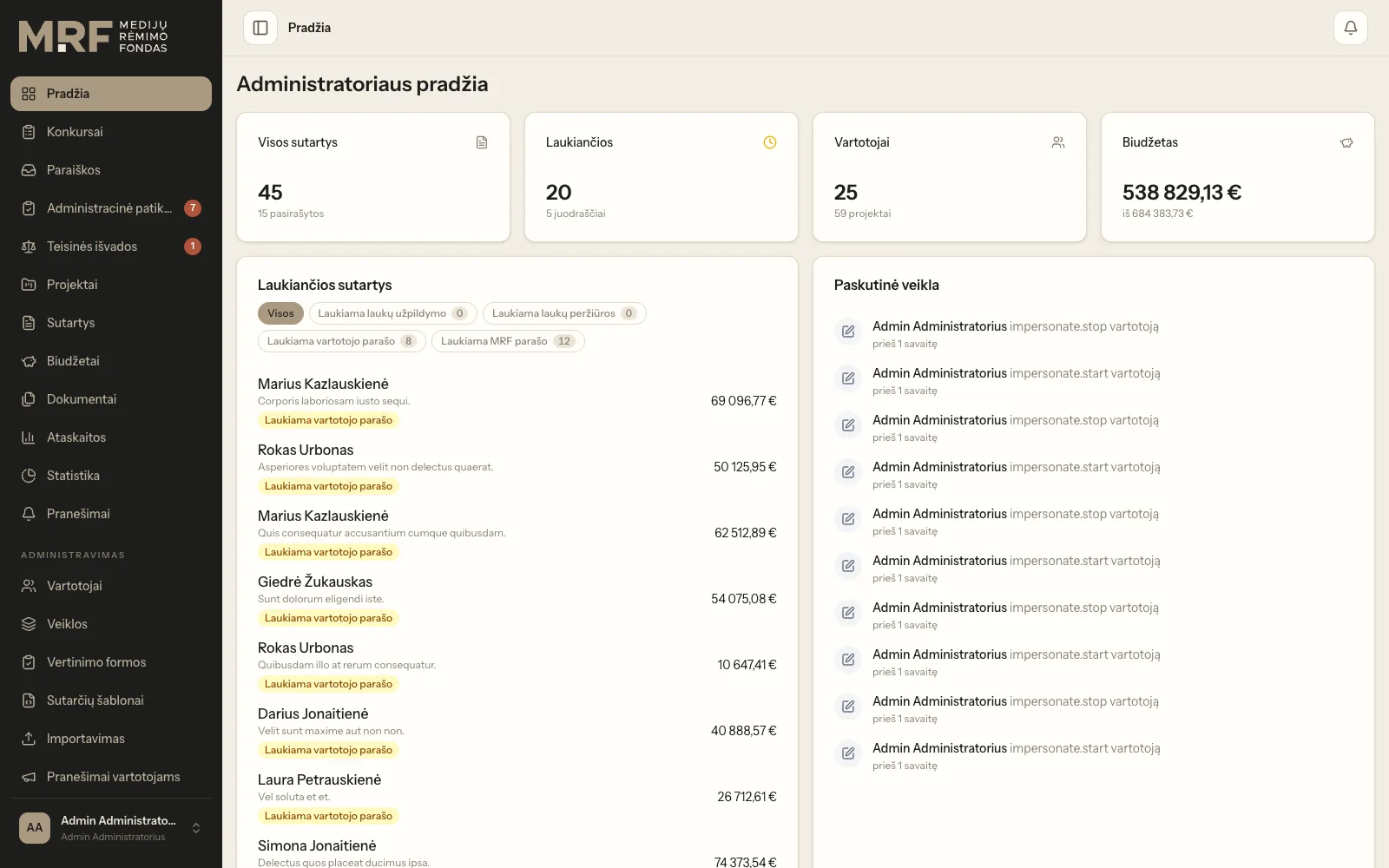
Application intake, expert assessment, budget approval and electronic contract signing in a single workflow.
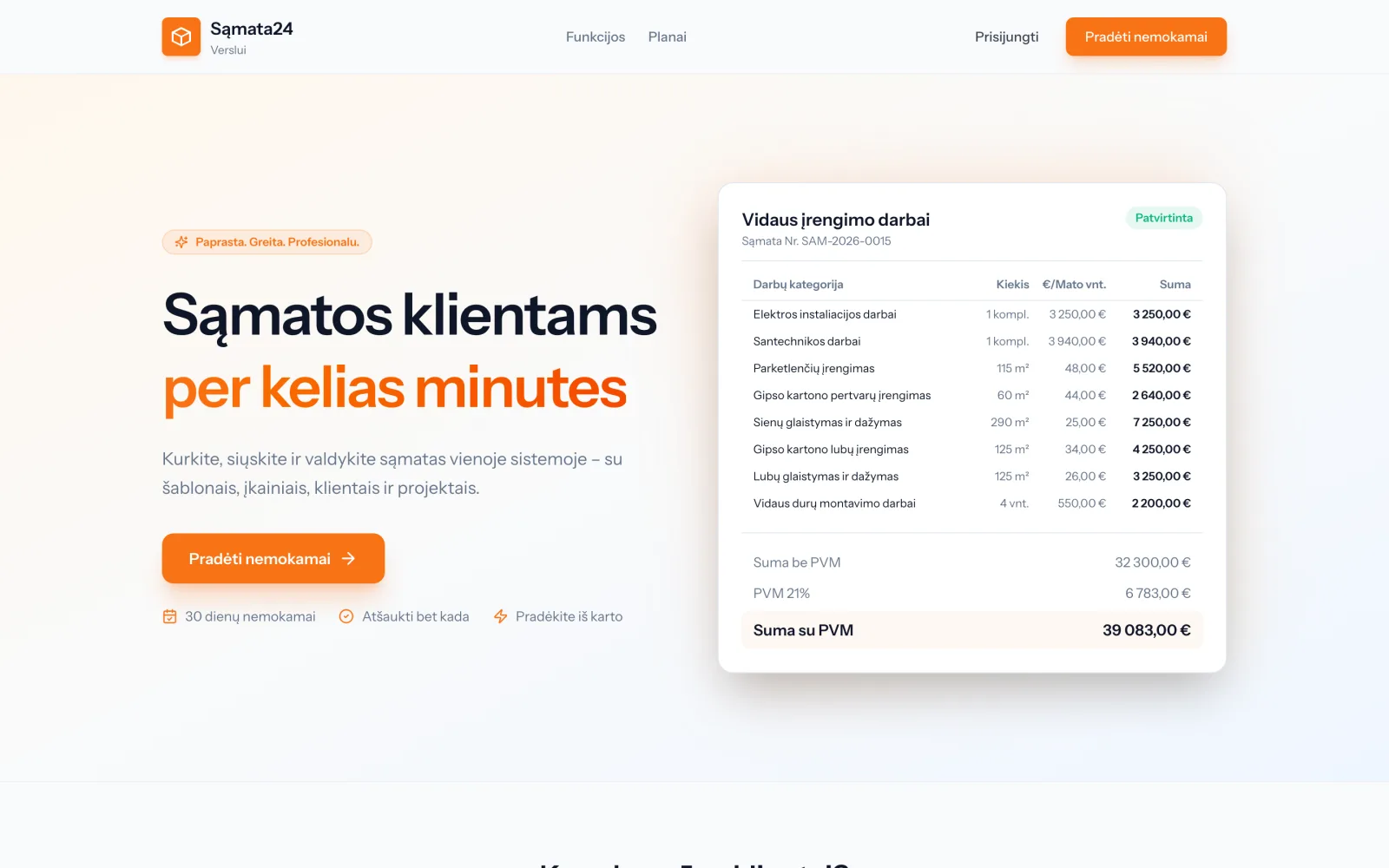
Estimate templates, material and plant prices by city, project completion certificates and subscription management.
Tell us about the process that causes the most friction today. We will come back with questions within one business day.
Or directly: info@desamedia.lt · +370 686 59999