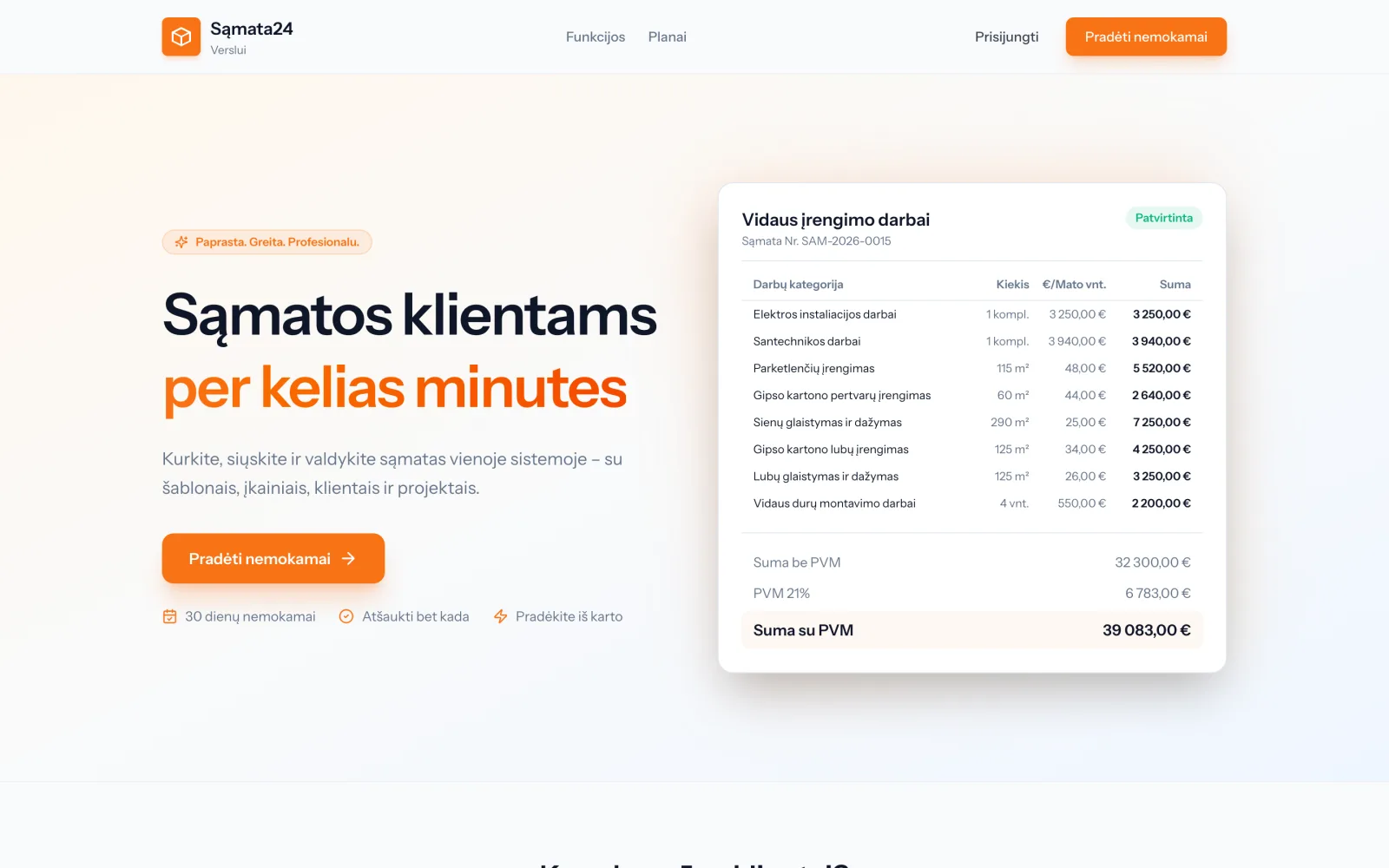
Construction estimating platform with subscriptions
Estimate templates, material and plant prices by city, project completion certificates and subscription management.
Process analysis, requirements and architecture before the first line of code is written. The result is a document you can take to a tender or to any developer.
IT consulting and system design is the work that happens before programming: finding out how a process works today, writing down what the system must do and designing the parts it consists of. The result is a requirements specification and an architecture decision from which any developer can build the system.
There are four situations where analysis pays for itself sooner than development.
The analysis ends not with a presentation but with a set of documents that can be handed to a third party. The scope is adjusted to your needs, but the standard set looks like this.
A conversation about context. One meeting where we find out what hurts and which solution you are already considering. Afterwards we send you the analysis scope and an estimate.
Process interviews. We talk to the people who do the work every day. Not to a single representative but to several people from different stages, because they usually describe the same process differently, and those differences are the most important information.
Review of existing systems. We look at what already works: accounting, spreadsheets, the online store, warehouse software. Some requirements fall away once it turns out the function already exists and only needs an integration.
Writing and agreeing the requirements. We review the list with you and split it into what is essential for the first version and what can wait. This conversation usually determines the project price.
Architecture and specification. We design the structure of the system and prepare the document. We present it in person, so that it is clear not only what is written but why.
A specification would be useless if only its author could understand it. That is why requirements are written as functions and outcomes rather than technology names. If a decision is dictated by your existing environment, such as your accounting software or public sector requirements, it is stated as a constraint with an explanation, not presented as our choice.
In practice this means you can take the finished specification to several developers and get comparable proposals. If we build the system afterwards, the completed analysis is counted towards the development scope.
In public sector projects, the analysis must end with a document that holds up throughout the procurement procedure. The technical specification is written in terms of functional requirements and a description of the outcome, without references to specific products, brand names or patents that would favour a single supplier.
On top of that come requirements private buyers usually do not have: accessibility to WCAG 2.1 AA, personal data processing requirements and document retention periods. We write these down together with the functions instead of leaving them to the supplier's discretion.
We do not advise on server administration, workstation support or computer networks, even though in Lithuania this work is also called IT consulting. Our field is software: processes, data, requirements and system structure.
If you need an existing website assessed rather than a new system designed, there is a separate free website audit for that.
The same project, two different starts.
| What happens | Without a specification | With a specification |
|---|---|---|
| Comparing proposals | Three prices for three different scopes | Prices for the same scope |
| Scope growth | Discovered during development | Agreed before work starts |
| Responsibility for gaps | Dispute over whether it was ordered | An item is either on the list or not |
| Changing supplier | The new developer starts from scratch | The document is handed over |
| Testing | Checked by gut feeling | Checked against requirements |
| Budget accuracy | Estimate based on experience | Calculation based on scope |
| Public procurement | Risk of complaints | Functional requirements, no brand names |
The output of consulting is documentation, not working software: a process map, a list of requirements, an architecture decision and a technical specification. With these you can run a tender, compare supplier proposals or start development. Development is a separate stage, and after the analysis it may not start at all.
Yes. The specification belongs to you and is written so that any developer can understand it. It does not name technologies that would tie you to a single supplier, unless you have such a constraint yourself, for example an existing accounting system or a public sector requirement.
Analysis of a single process usually takes 2-3 weeks; several related processes with integrations take 4-6 weeks. The duration depends not on the size of the system but on how many people are involved in the process and how differently they describe the same work.
You do not need to write anything. It is enough to know who is involved in the process and which software you use today. It helps if you can show real documents: the spreadsheet where everything is kept, or the list that has to be retyped by hand every week.
We talk to the people who run the process every day, not only to managers. Usually that means 3-6 people from different stages of the process. Decisions on scope are made by the client's representative, but requirements are gathered from those who will use the system.
Yes. The specification is written in terms of functional requirements and outcomes rather than specific products or brand names, as the Lithuanian Law on Public Procurement requires. This keeps competition open between suppliers and avoids complaints of discrimination.
Yes. With a list of requirements, proposals can be compared on the same scale: what each supplier covers, what it does not, and where the price covers a different scope. Without a shared list, three proposals are usually three different projects.
That is a valid result too. Some problems are solved by configuring an existing system, by a single integration or by changing the process without any programming. We say so, because it costs less than a six-month project that does not solve the same problem.
The analysis is a separate stage with its own scope and estimate. If it is followed by development, the completed analysis is counted towards the development scope, because the design work does not need to be repeated.
Estimate templates, material and plant prices by city, project completion certificates and subscription management.
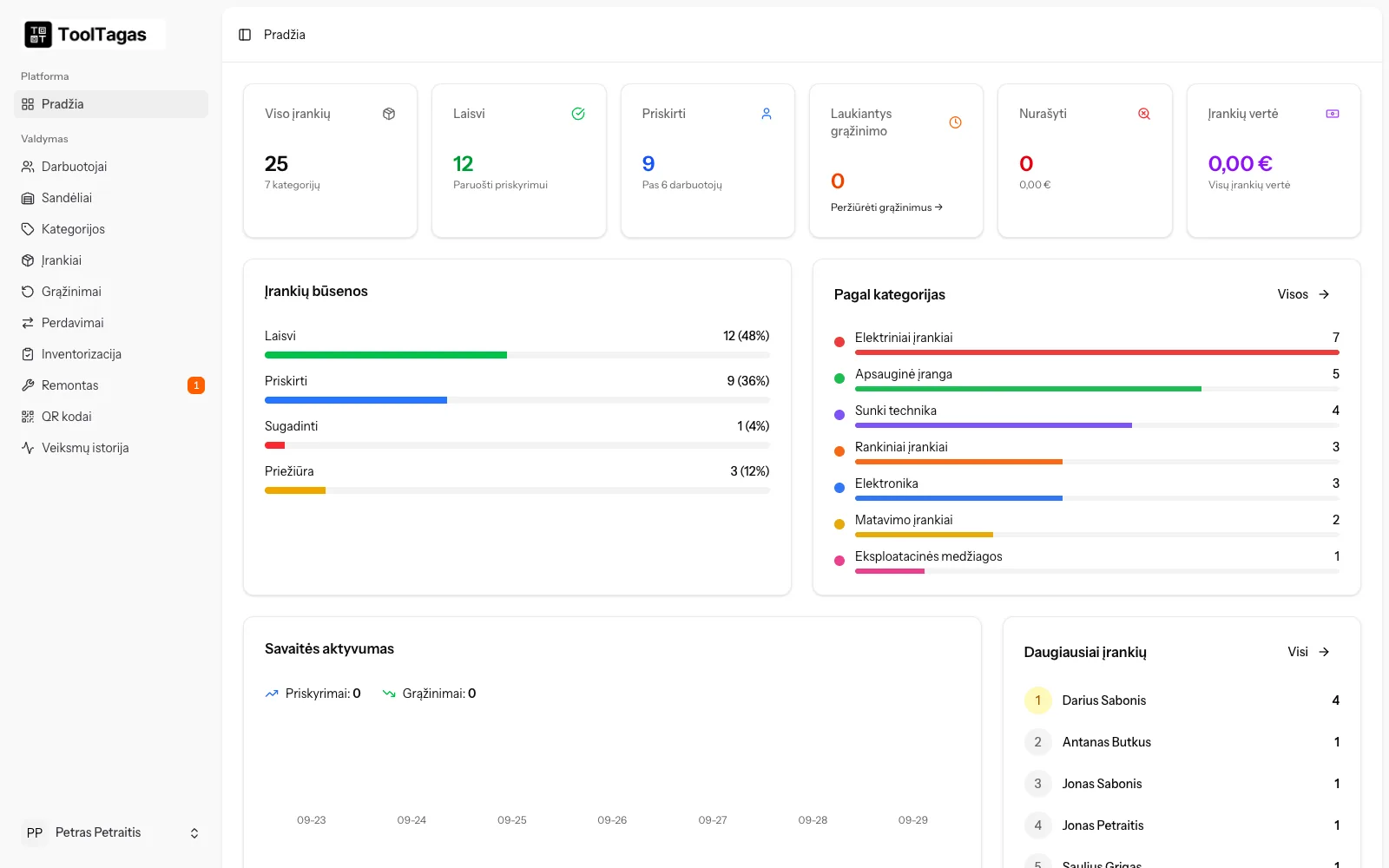
QR code based tool tracking: assignments, handovers with photos, inventory checks on a phone, and subscriptions.
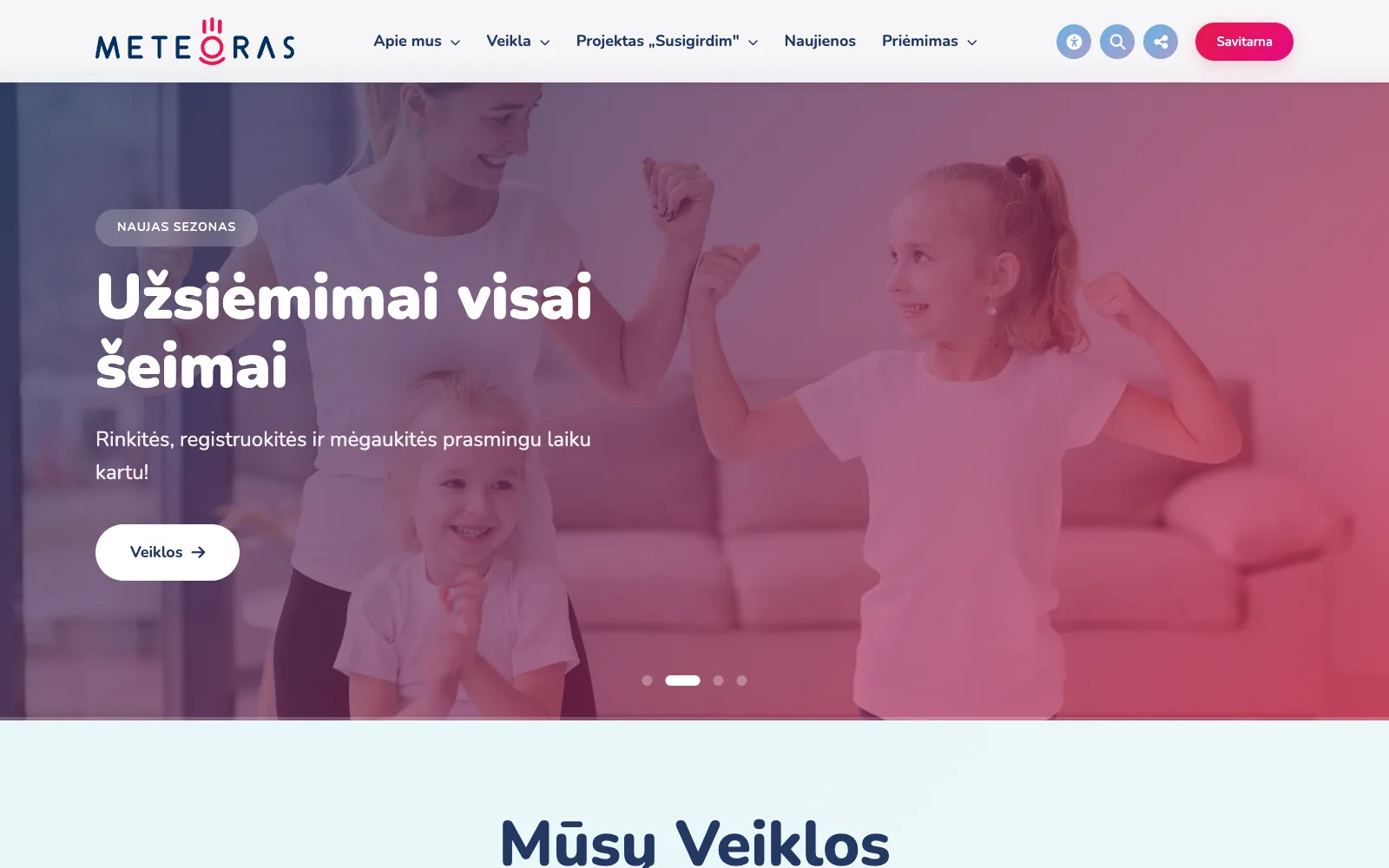
An activity catalogue with free places, registration, contract signing with a qualified e-signature and an attendance register.
Tell us what happens today. We will get back to you with questions and an initial direction within one working day.
Or directly: info@desamedia.lt · +370 686 59999