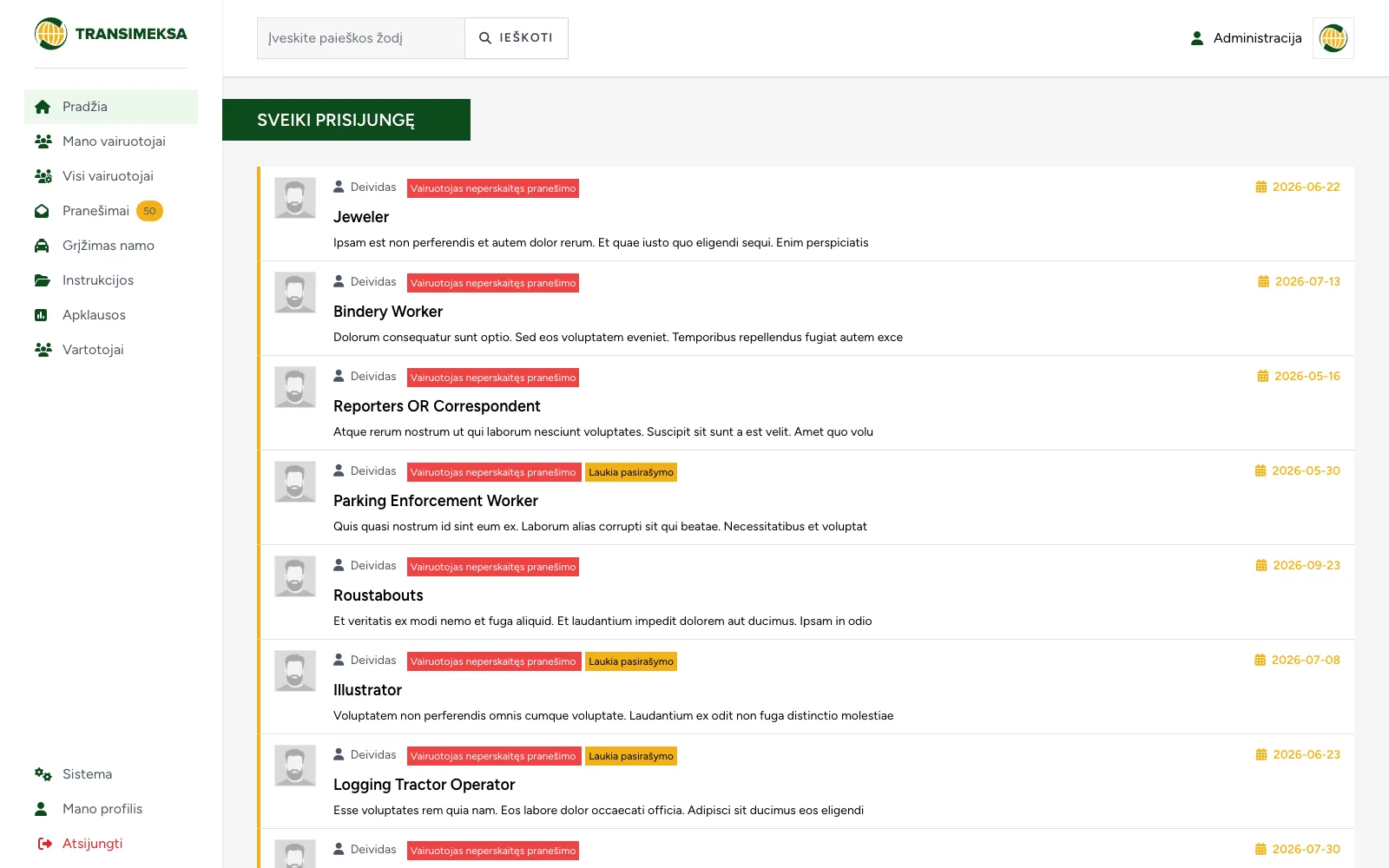
Driver communication and document management system
Instructions, documents and surveys for drivers, with a dedicated mobile interface for drivers and a separate one for managers.
Application intake, expert assessment, budget approval and electronic contract signing in a single workflow.
ProblemApplications, assessment forms and contracts were sent back and forth by email as document files. Assessors' comments got lost and no version history of contracts was kept, so there was nothing to rely on in a dispute.
SolutionWe built a platform with funding programmes and calls, configurable assessment forms and budget lines. Contracts are generated from templates, fields are agreed one by one with comments, and signing is electronic. Every action is recorded in an audit log.
Administering funding calls differs from ordinary business processes in that every decision must be justified and traceable, even a year later. If an application is rejected, the applicant has the right to ask why, and the answer cannot rely on memory.
So the key requirement was evidence: who made which decision and when, and which version of the contract was in force at the time of signing.
The analysis showed that the system has three user groups with different needs. The applicant needs a clear form and the ability to see which stage their application is at. The assessor wants to see only what they are assessing, without administrative detail. The administrator manages deadlines and needs the full picture.
A single interface for all three usually suits none of them, so each role has its own workspace and its own permissions.
Calls and programmes. Each call belongs to a programme and has its own categories, deadlines and budget. The administrator launches a new call without any help from a developer.
Configurable application forms. The administrator builds forms from sections and fields. This was a key decision: applications differ between programmes, and if every new form had to be programmed, the client would always depend on us.
Assessment. Assessment forms are configurable too. A comment and an attachment can be added to each criterion. Assessors see only the applications assigned to them.
Budgets. The application budget is built from lines that can be agreed one at a time. The approval history is kept.
Contracts. The contract is generated from a template, and its fields are filled in with application data. Then comes the part that off-the-shelf products usually lack: each contract field is agreed separately, with a comment and a status. Once all fields are agreed, the contract is signed electronically.
An audit log from day one. Every action is recorded with the user, the time and the changed value. This makes each operation somewhat more complex, but without the log the system would not do its job.
Individual contract fields are agreed. The usual approach is to store PDF versions and compare them. Here each field is agreed separately, so it is clear exactly what was discussed and nobody has to compare two documents by eye.
The signing service is decoupled from contracts. Signing providers change, and legal requirements differ between situations. The system is built so that switching provider does not require changes to the contracts module.
Permissions by role, not by person. Assessors change every season. When permissions are tied to a role, a new person can be assigned in a minute without leaving security gaps.
If your process involves deadlines, appeals or public funds accounting, start by answering "what will we have to show if a decision is appealed?", and only then think about how the system will look. The answer determines what data the system must keep. An audit log can be added later, but it will not cover what happened before it existed.
One more observation: configurable forms cost more than hard-coded ones, but they pay for themselves within the first two new calls.
Instructions, documents and surveys for drivers, with a dedicated mobile interface for drivers and a separate one for managers.
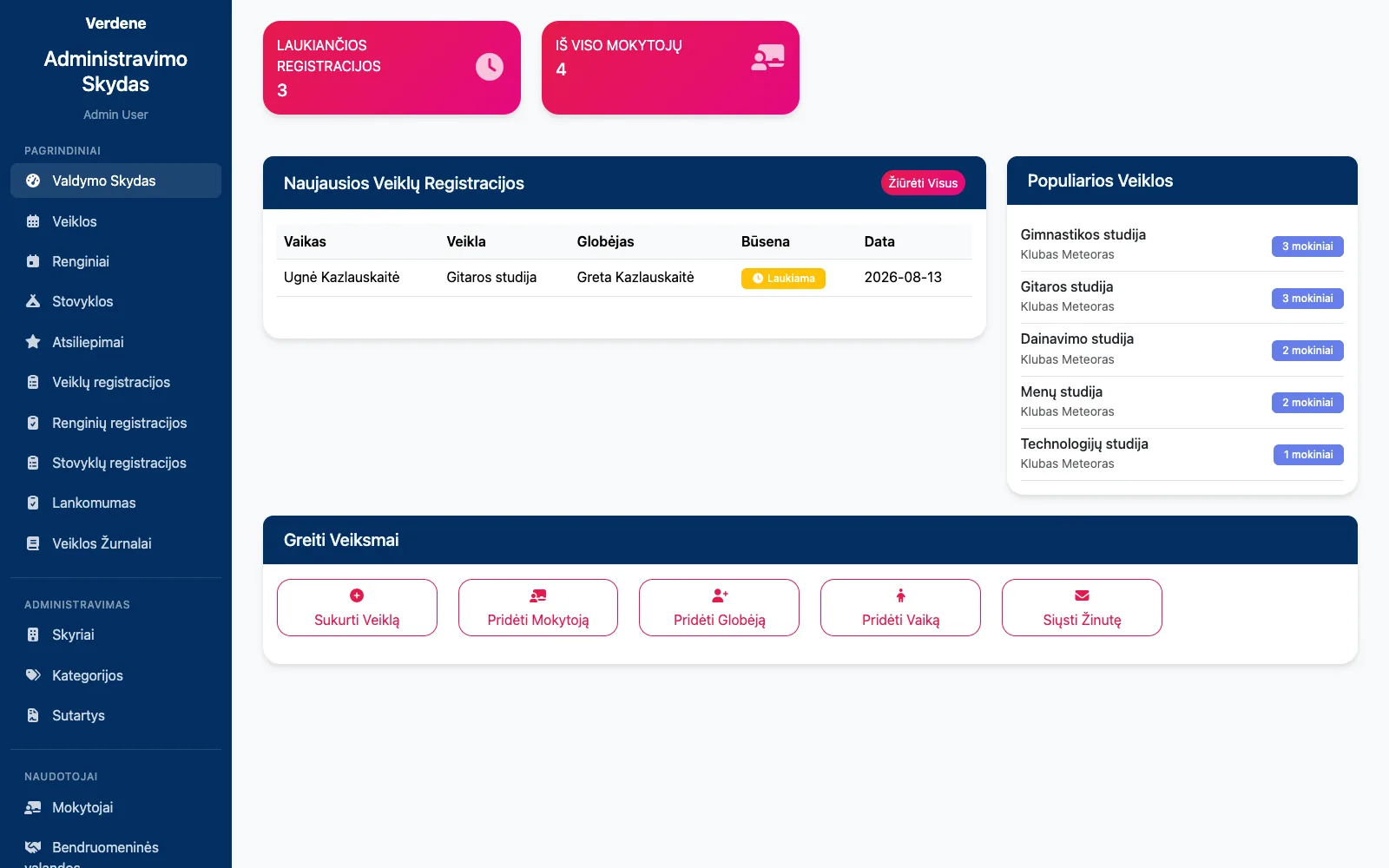
Club and camp registrations, attendance, contracts with parents and their termination in one system.
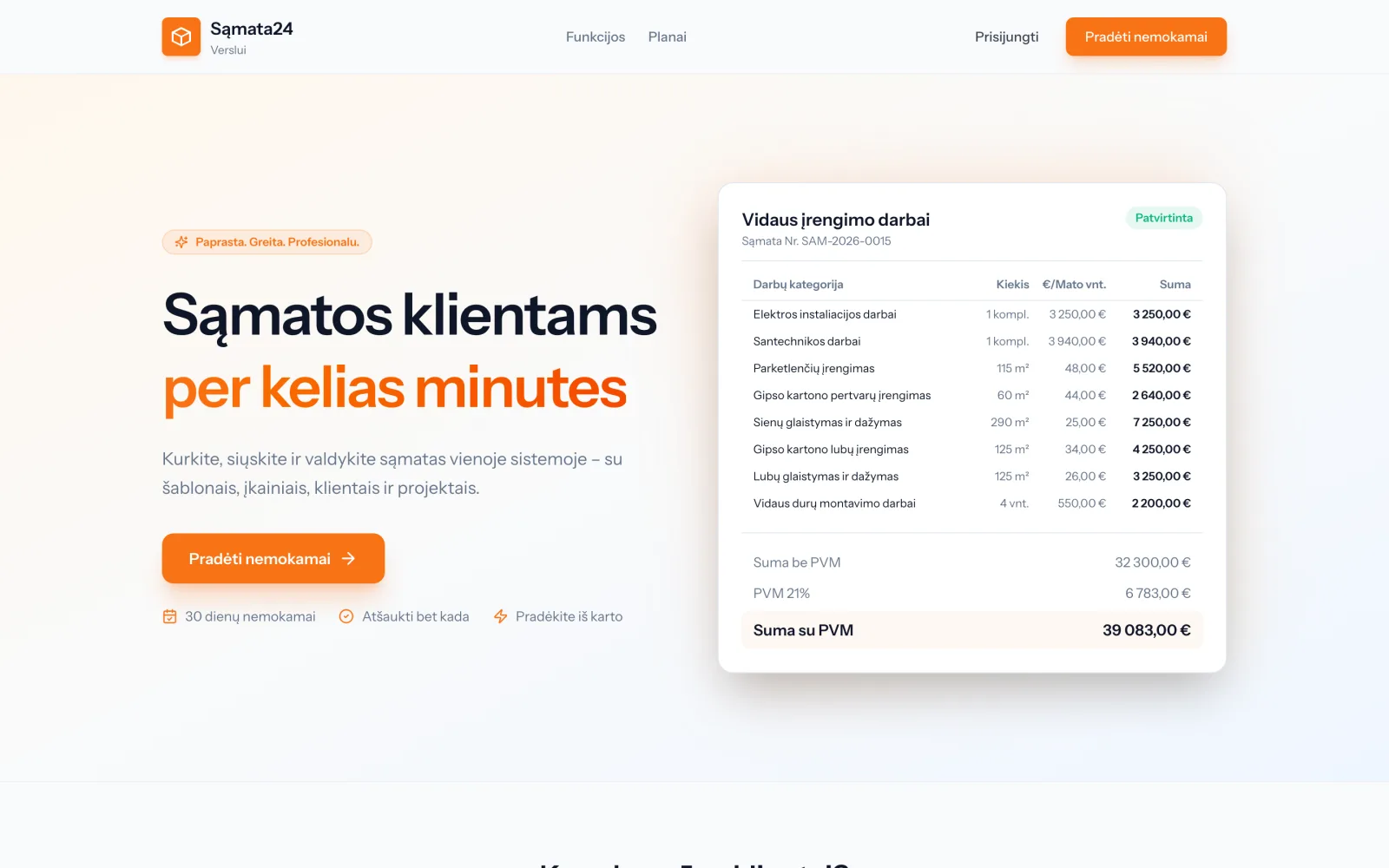
Estimate templates, material and plant prices by city, project completion certificates and subscription management.
Tell us about the process that causes the most friction today. We will come back with questions within one business day.
Or directly: info@desamedia.lt · +370 686 59999