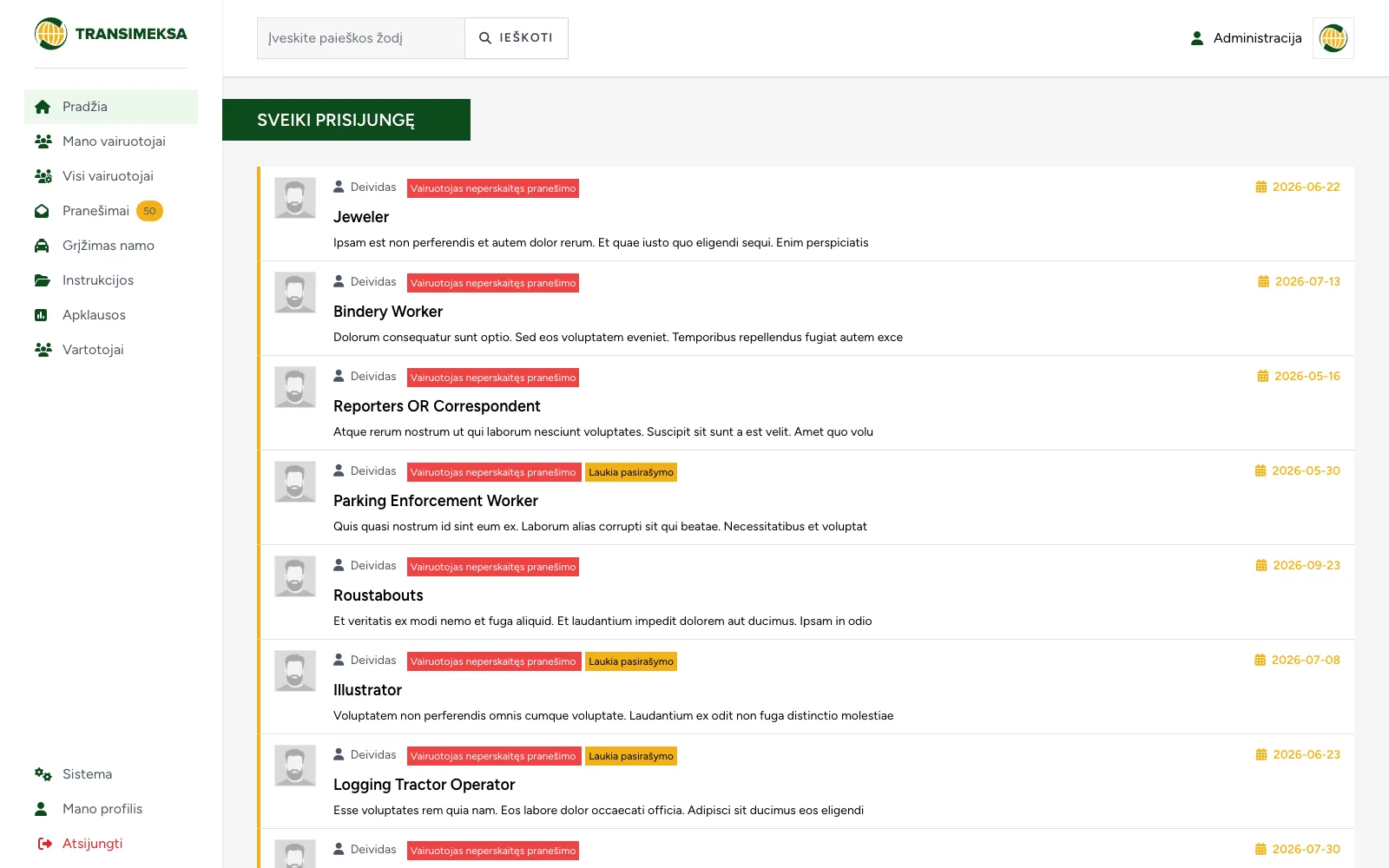
Driver communication and document management system
Instructions, documents and surveys for drivers, with a dedicated mobile interface for drivers and a separate one for managers.
A public job board platform with a CV database, employer self-service and candidate screening.
ProblemThe client needed a product that could compete with the large job portals: with its own CV database, employer self-service and candidate management, not just a list of vacancies.
SolutionWe built a platform with structured CV profiles, vacancy management, candidate folders and ratings, employer accounts and membership payments. The system has been live and under continuous development since 2021.
A job board looks like a simple product: vacancies, search, CVs. In reality, one portal runs two different systems, one for the candidate and one for the employer. Their interests differ, and they measure success differently.
The candidate wants to find a suitable vacancy quickly and apply without filling in ten fields. The employer needs to narrow a hundred applicants down to five and not lose track of them within a week.
The most important decision was made at the very beginning: the CV is completed as a structured form, not uploaded as a file. Uploading a file is quick, but it cannot be filtered, compared with others or updated section by section.
Candidates spend more time filling in the form, and the development effort was several times greater. But this is the only way an employer can find candidates by specific criteria.
Candidate profile. The CV is made up of separate sections: work experience, education with degrees and study programmes, languages with levels, competences, knowledge, certificates, driving licence categories and preferred place of work. Each section can be edited separately, and every one can be used as a filter.
Vacancies. A vacancy specifies the position, type of work, and required languages and knowledge. As a result, a candidate's fit can be assessed against the requirements, not just by keyword.
Candidate management. Employers sort candidates into folders, score them and write notes. A separate report is available for each candidate, and the number of views is visible.
Blacklist. An employer can hide their vacancies from specific companies. It is a small feature, but some employers would not advertise at all without it.
Memberships and invoices. Employer access is managed through memberships, which are invoiced within the system.
References. A reference is attached to a CV as a separate record, not as free text in the profile.
CV and vacancy view history. The system records who viewed a CV or vacancy and when. Candidates get an answer to their most common question: has anyone seen my CV? Employers can see how much attention a vacancy is getting.
Lists are managed by the administrator. The lists of languages, degrees, study programmes, nationalities and certificate types are edited in the admin interface. Since 2021 they have changed more than once, and no developer was needed.
Fast search as the database grows. A search with ten filters over structured CVs is a heavy query. So the data used for search is prepared separately, and the portal does not slow down as the number of CVs and vacancies grows.
Under development since 2021. Many new features have been added over that time, but the system has never needed to be rewritten.
Two-sided platforms have a well-known problem: without candidates, employers do not come, and without employers, candidates do not come. Software does not solve this, but it can make it easier. It is worth starting with the side that is easier to attract and giving it value even while the other side is still empty.
A structured CV pays off over time, but registration becomes more demanding. It is worth letting candidates start with a minimal profile and complete it gradually.
Instructions, documents and surveys for drivers, with a dedicated mobile interface for drivers and a separate one for managers.
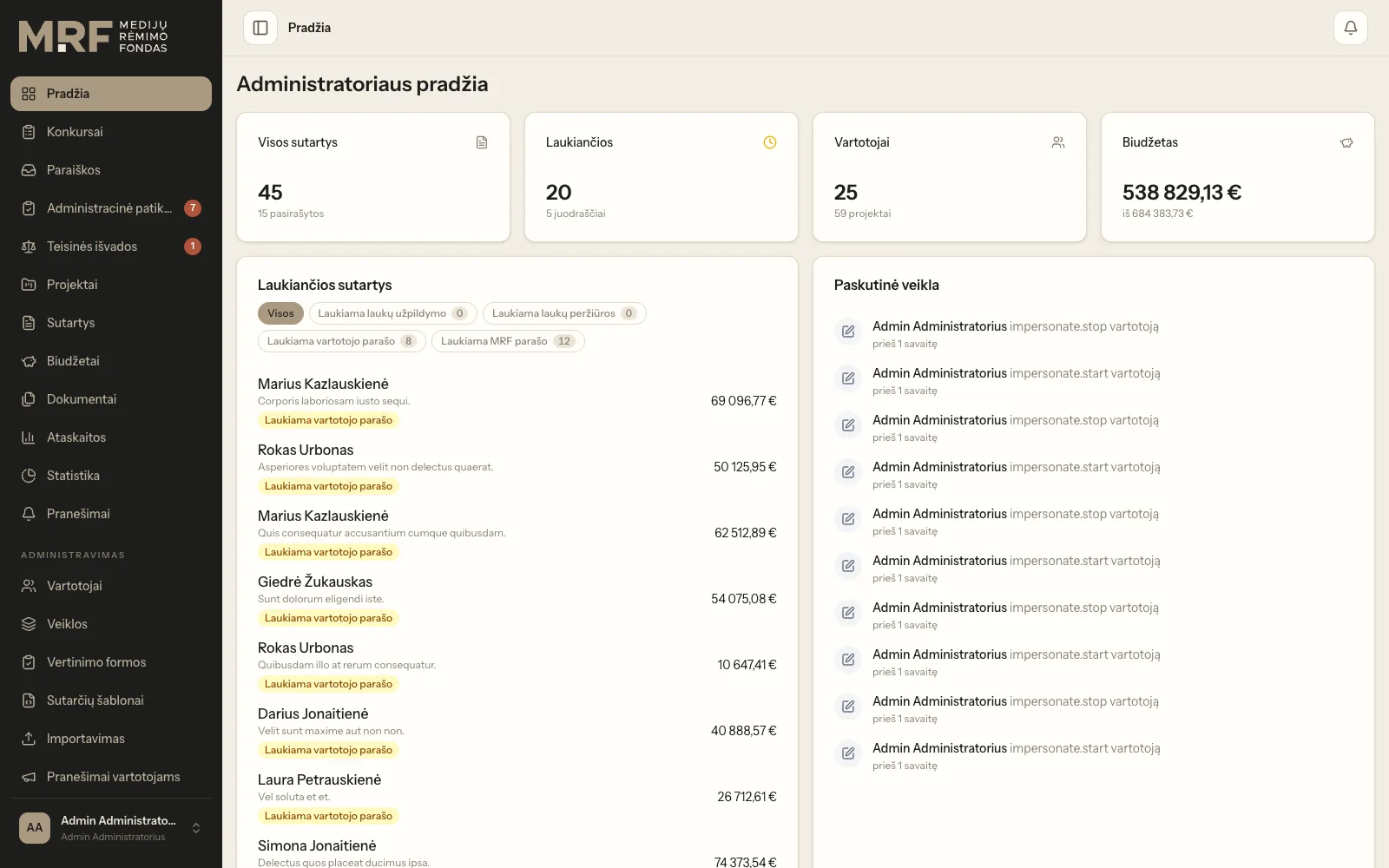
Application intake, expert assessment, budget approval and electronic contract signing in a single workflow.
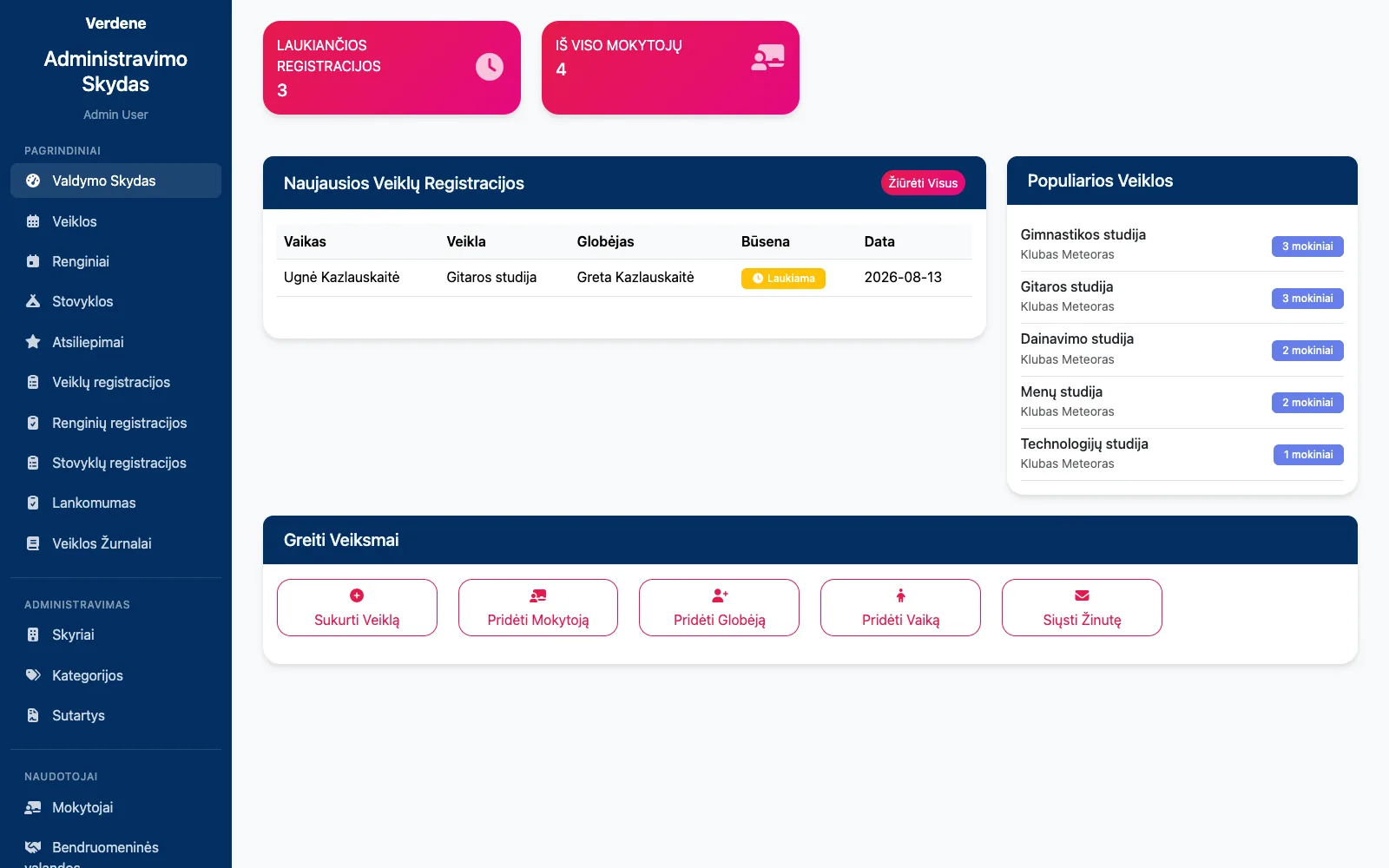
Club and camp registrations, attendance, contracts with parents and their termination in one system.
Tell us about the process that causes the most friction today. We will come back with questions within one business day.
Or directly: info@desamedia.lt · +370 686 59999