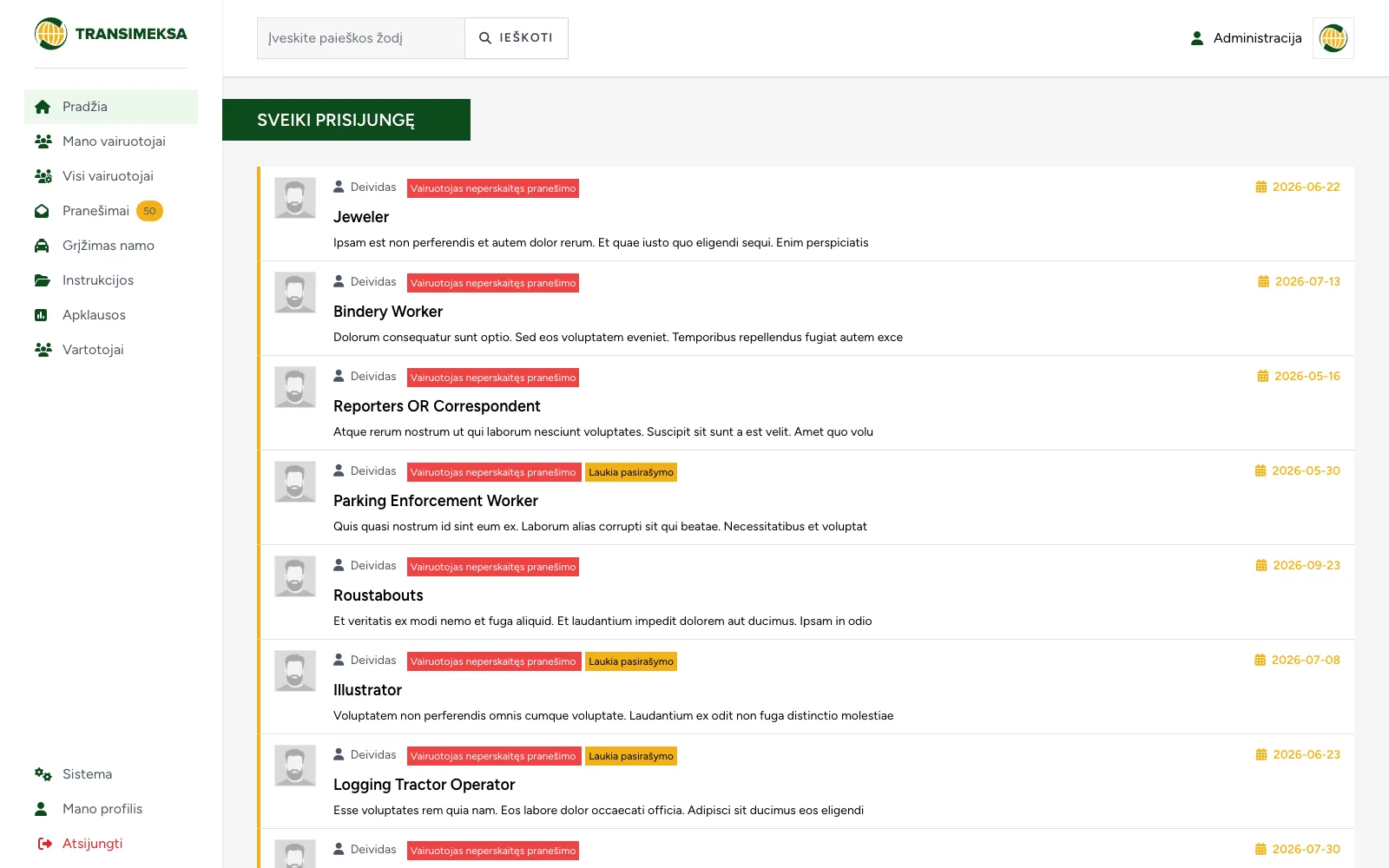
Driver communication and document management system
Instructions, documents and surveys for drivers, with a dedicated mobile interface for drivers and a separate one for managers.
Estimate templates, material and plant prices by city, project completion certificates and subscription management.
ProblemEstimates built in spreadsheets do not hold up in a dispute: formulas break, prices go out of date and every employee has their own version. Prices also vary by region.
SolutionMaterials and plant are linked separately to each estimate line, prices are stored for each city, and templates are used for recurring work. Changes are logged, because an estimate is a negotiation document.
A construction estimate is a document that has to hold up in a dispute. The client compares several bids, and the contractor has to explain what makes up the price. Estimates built in spreadsheets cannot do this: formulas break, prices go out of date, and every employee has their own version.
Regional price differences make the work harder. The same material and the same work cost different amounts in different cities.
An estimate has three parts: labour, materials and plant. The price of each changes in its own way. Materials go up often, plant hire changes less often, and labour rates depend on the city.
Contractors keep pricing similar projects. Starting from a blank sheet each time is where most of the time is lost.
The platform is sold as a subscription, so access levels and payment status had to match actual usage.
An estimate is built from lines, and materials and plant are linked separately to each line. When the price of one material changes, you immediately see how the whole estimate changes, with nothing to recalculate by hand.
Prices are stored separately for each city, so the same template works for different regions without separate copies.
Templates let you start from a ready structure. A contractor who often does the same type of work creates their own template and uses it as a base.
Project completion certificates record finished stages, so the estimate also becomes a document for tracking the work.
Estimates have versions. Once a quote is sent to the client, that version is locked, and later changes are saved as a new version linked to the original. In negotiations it is always clear which version the client saw and what has changed since.
Subscriptions have different access levels, and every action is logged. This matters not only for security: when several people work on the same estimate, the question "who changed this price?" comes up all the time.
The platform is sold self-service, without talking to a salesperson, so it needed things that internal company systems usually do not.
A new user answers a few questions about their line of work, and the system prepares starter classifiers for them. Otherwise the first screen would show an empty list, which is the most common reason not to come back.
Usage is counted by period, so you can see how many estimates a user created in a month. Plan limits and the prompt to move to a bigger plan depend on this.
Help is available inside the system: videos, frequently asked questions and a feedback form. This is cheaper than a separate support channel, and questions arrive with context.
Materials and plant kept separate. If they were merged into a single line price, estimates could not be recalculated automatically when the price of one material changed.
Prices by city. Regional differences in construction are real, and a single average would inflate an estimate in one place and understate it in another.
A change log for each estimate. An estimate is a negotiation document, so its change history is something the user needs.
Versions instead of overwriting. A locked version linked to the original means that even six months later you can answer what the client saw in February.
Instructions, documents and surveys for drivers, with a dedicated mobile interface for drivers and a separate one for managers.
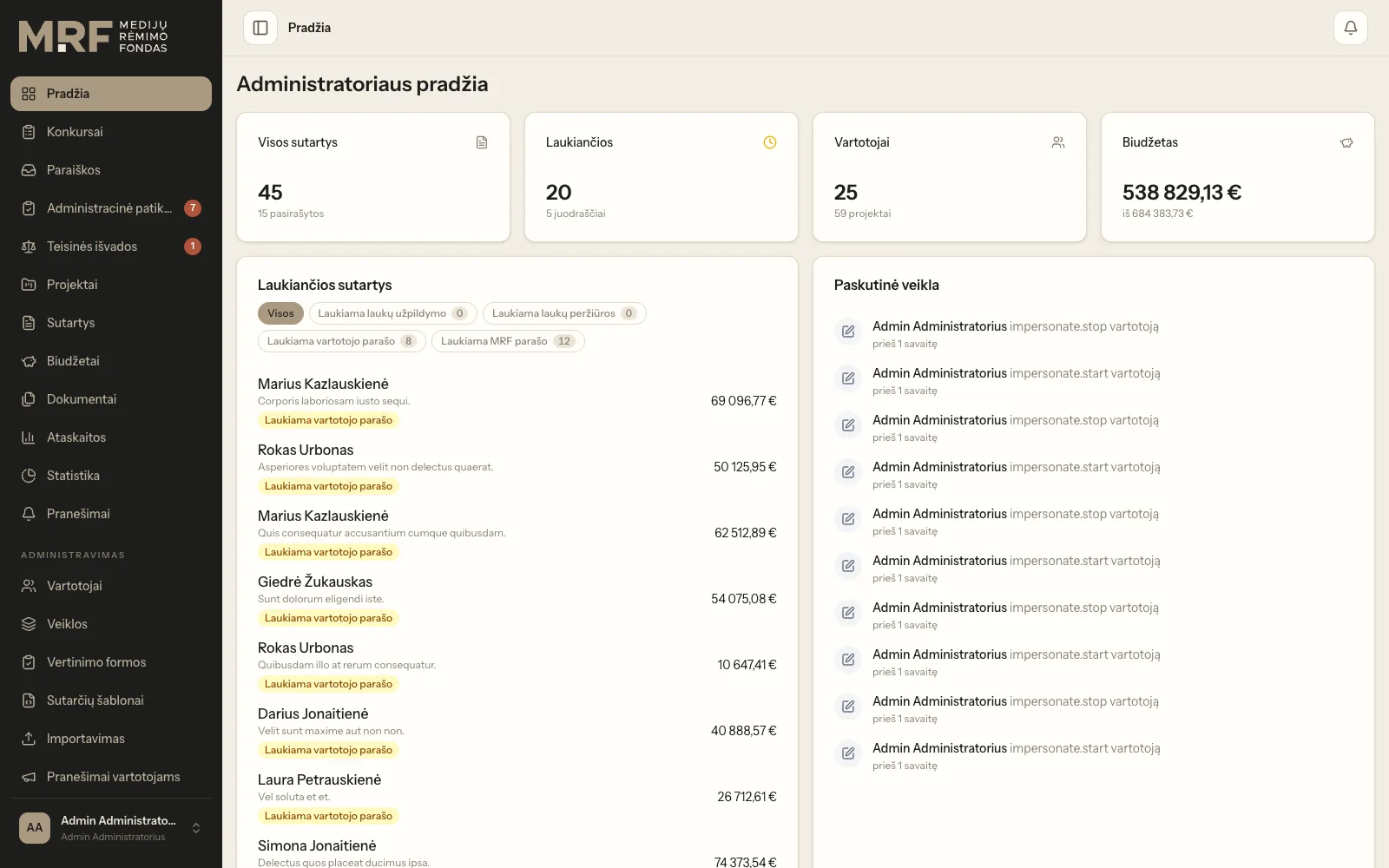
Application intake, expert assessment, budget approval and electronic contract signing in a single workflow.
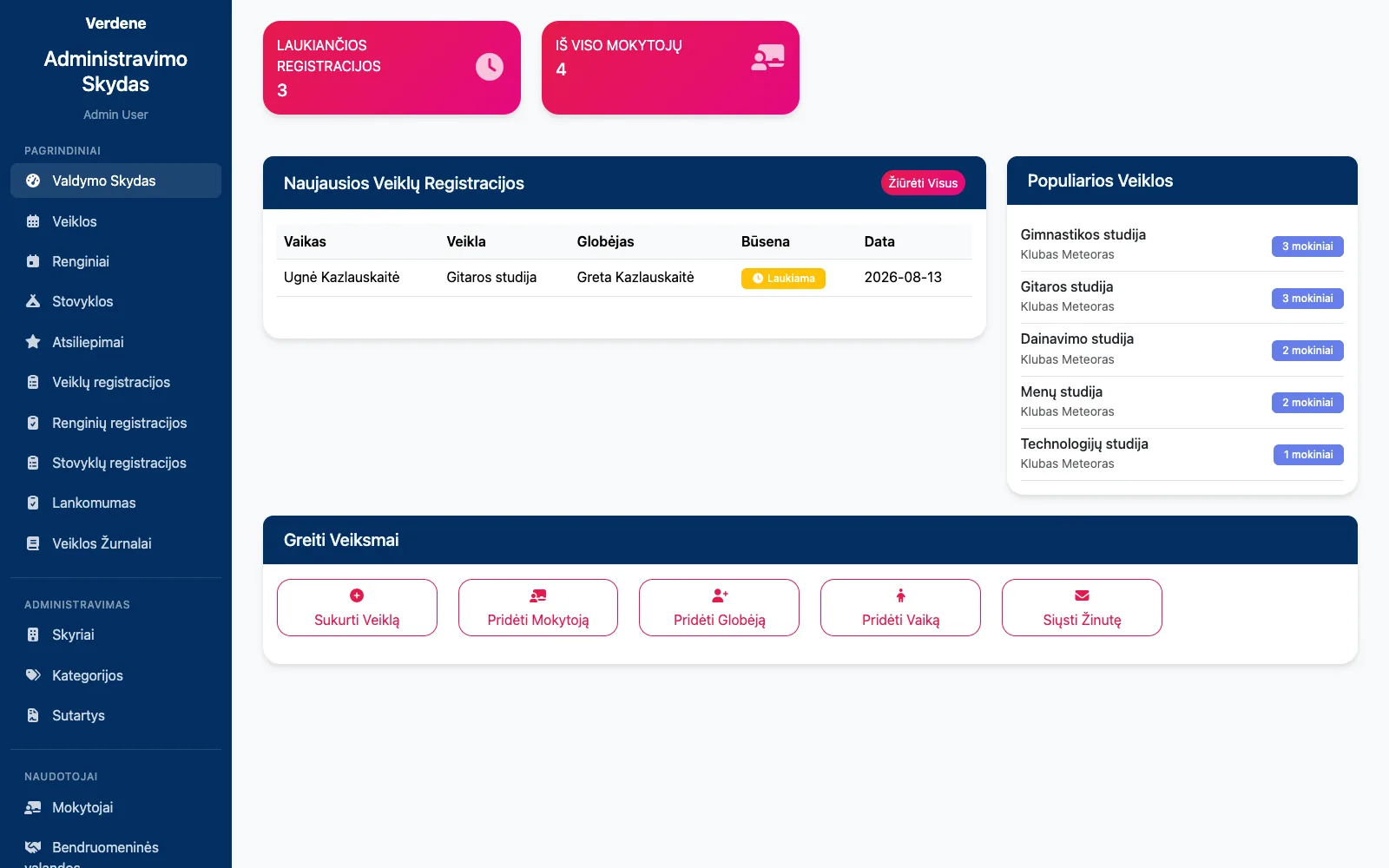
Club and camp registrations, attendance, contracts with parents and their termination in one system.
Tell us about the process that causes the most friction today. We will come back with questions within one business day.
Or directly: info@desamedia.lt · +370 686 59999