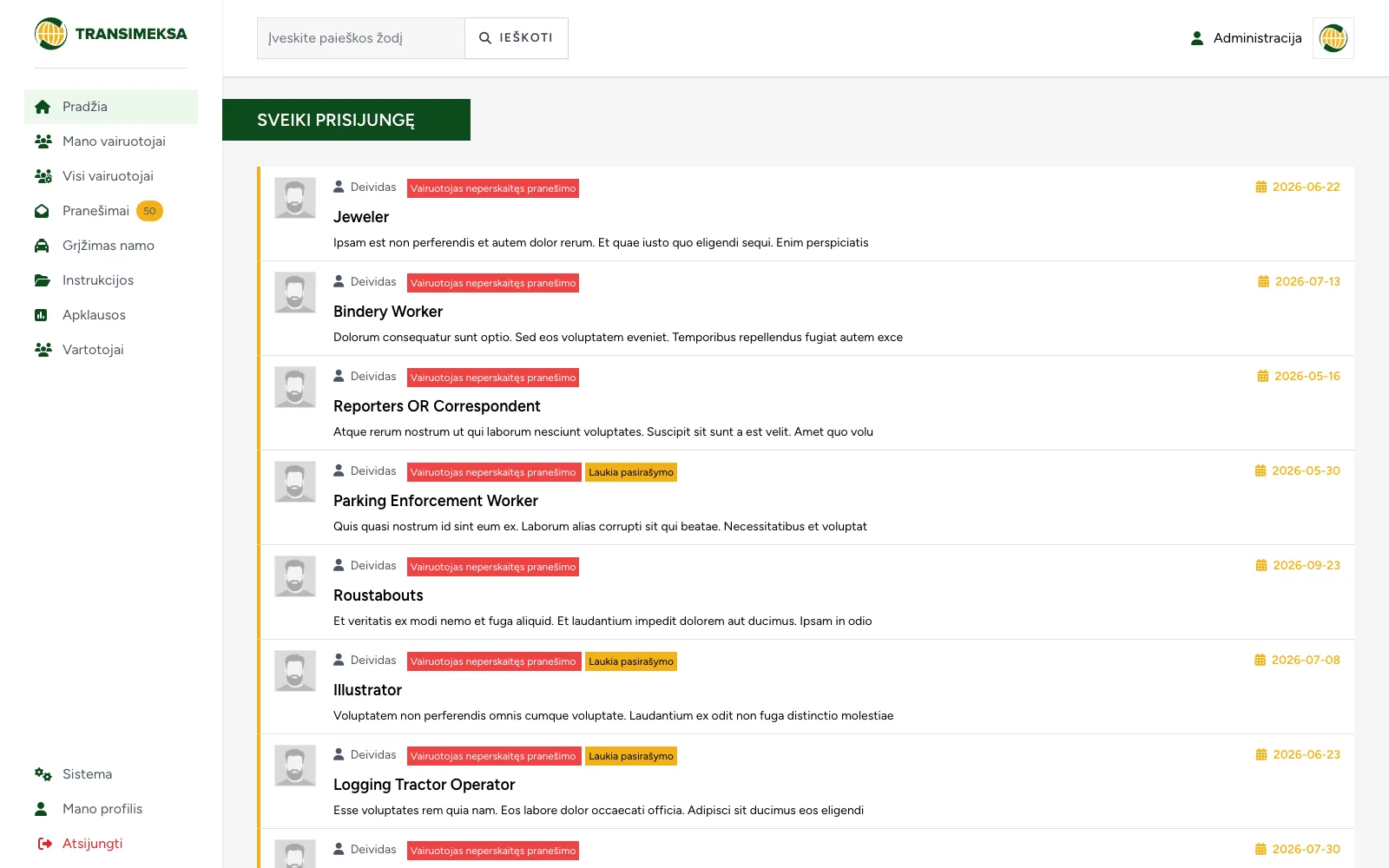
Driver communication and document management system
Instructions, documents and surveys for drivers, with a dedicated mobile interface for drivers and a separate one for managers.
A content bank for a media support fund: newsrooms upload their own articles, shows and podcasts, and text articles can also be listened to.
ProblemContent from fund-financed projects must be freely available for two years, but it is scattered across the websites of several dozen newsrooms, each preparing it in its own way.
SolutionOne place for all the content: newsrooms upload or import entries themselves, visitors browse by programme and format, and text articles can be listened to as audio.
The state media support fund finances hundreds of projects every year: regional newspapers, podcasts, cultural magazines, investigative journalism and programmes in national minority languages. Under the fund's rules, the content of these projects must be freely available for at least two years, not only on the publisher's website but also with the fund itself.
This is how the content bank came about: one place to find everything created with the fund's money. It publishes articles, video programmes and audio recordings from several dozen newsrooms.
The hardest part was adapting the system to the people who fill it. Content is uploaded by the newsrooms themselves, and each works differently: some have text with photos, others only a YouTube link, others an audio file. If uploading were difficult, the bank would stay half empty and the fund would have to collect the material itself.
Visitors need to find what they are looking for quickly. With thousands of entries, a list sorted by date is not enough.
Accessibility mattered too. The fund's mission is information for everyone, so it had to be possible to listen to text as well.
Each newsroom has its own account. After logging in, it uploads content, selects the funding programme it received support under and adds a link to the original source. Larger newsrooms do not have to move everything by hand: articles can be imported from their own systems. If some entries fail to transfer, this is visible straight away and the import can be repeated.
For visitors, content is organised by the fund's programmes, and within each programme they can filter to video, audio or text entries only. Each entry shows which newsroom uploaded it, and related entries from the same programme are suggested alongside.
For text articles, the system creates an audio version automatically. Readers can listen to it while driving, for example, or simply when their eyes are tired. The audio is generated by an external service. If it occasionally does not respond, the system retries later so the article is not left without audio.
Photos and files are kept in a shared library, so the same image does not have to be uploaded several times. The website has light and dark themes, search and accessibility settings.
The success of a project like this depends on the convenience of the person uploading content, not the visitor. If uploading an entry takes a newsroom ten minutes, some newsrooms simply will not do it. That is why we spent most of the time on the upload process, and the look of the home page came second.
Instructions, documents and surveys for drivers, with a dedicated mobile interface for drivers and a separate one for managers.
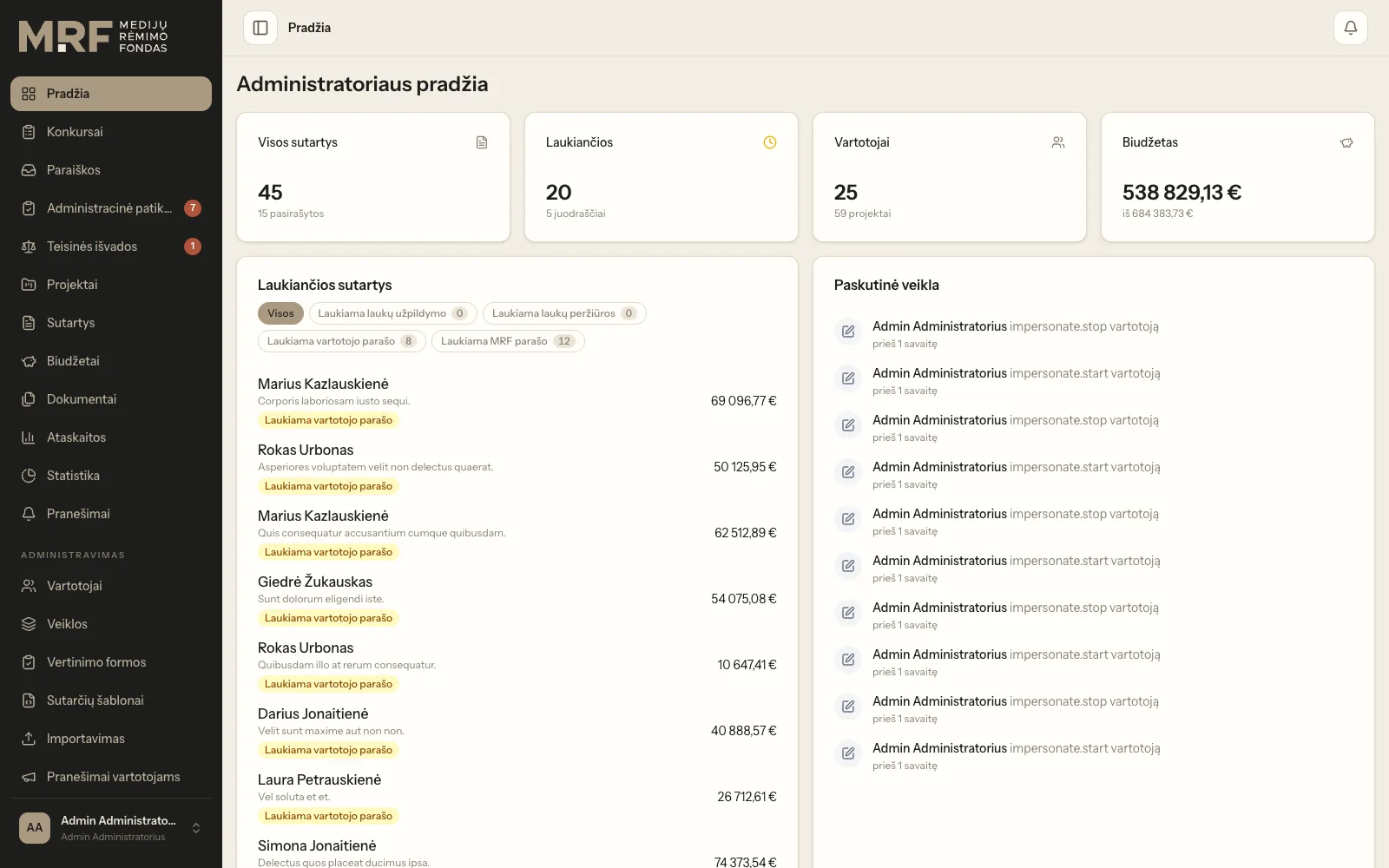
Application intake, expert assessment, budget approval and electronic contract signing in a single workflow.
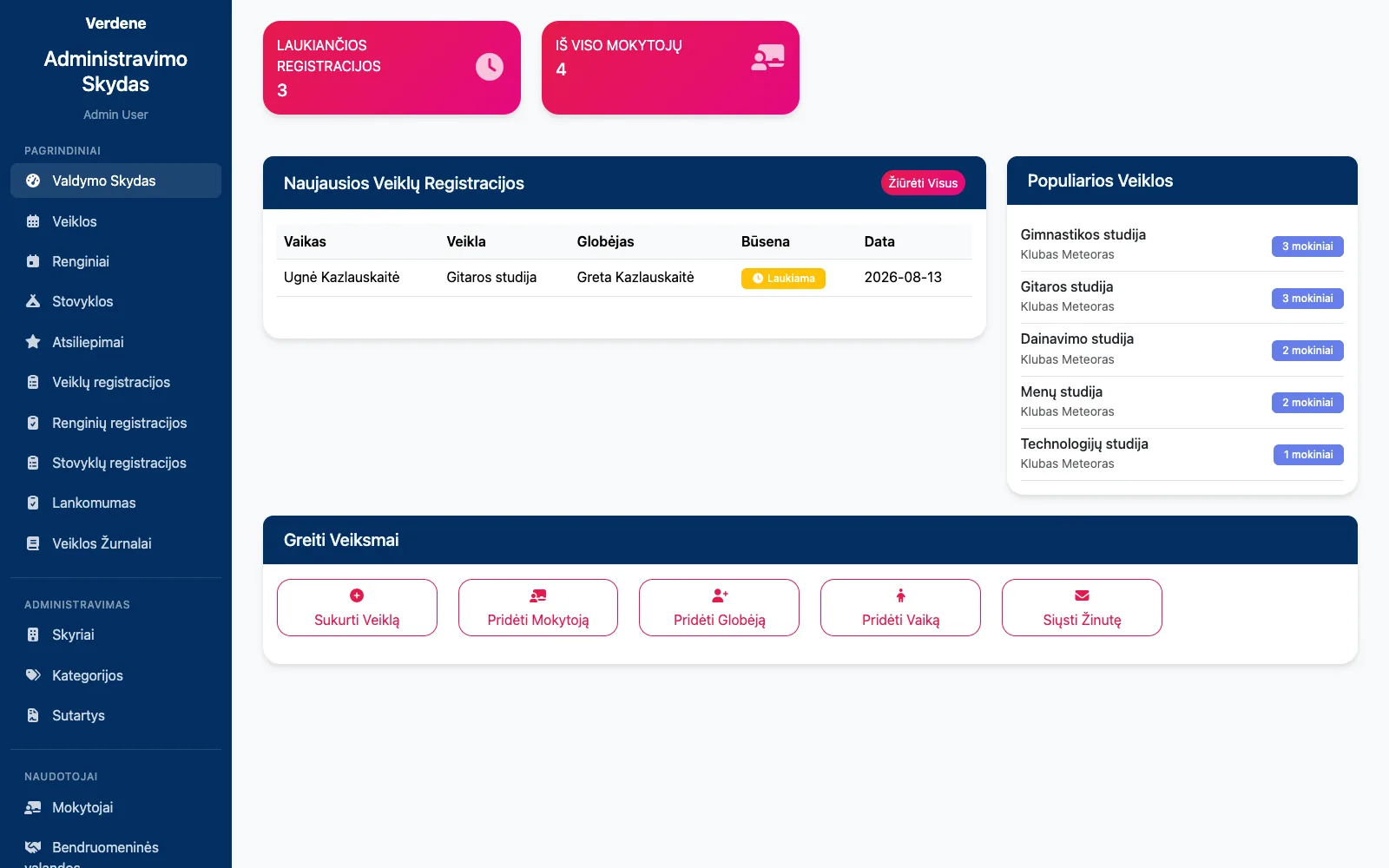
Club and camp registrations, attendance, contracts with parents and their termination in one system.
Tell us about the process that causes the most friction today. We will come back with questions within one business day.
Or directly: info@desamedia.lt · +370 686 59999