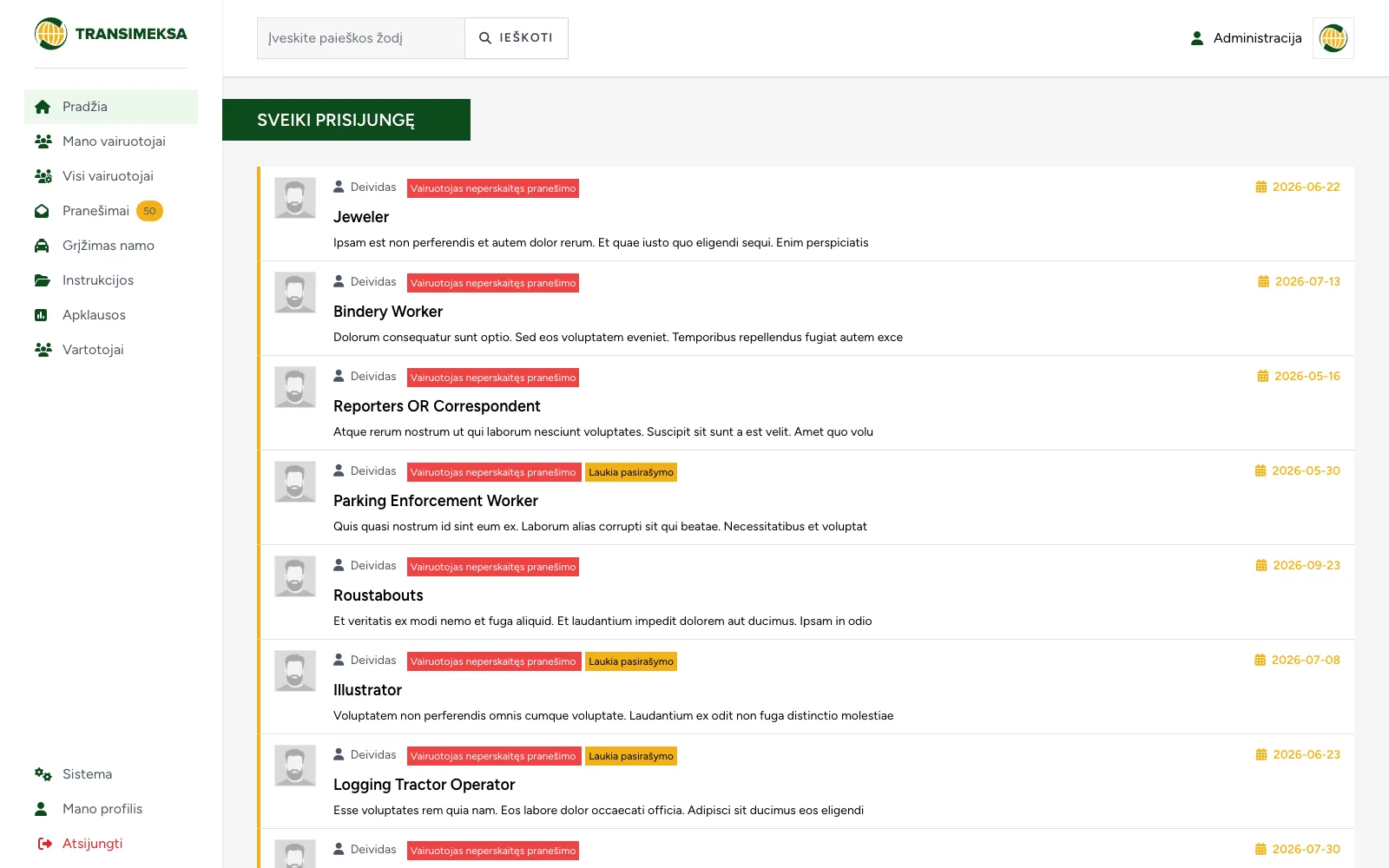
Driver communication and document management system
Instructions, documents and surveys for drivers, with a dedicated mobile interface for drivers and a separate one for managers.
Report generation, purchases, invoicing and API access for partners.
ProblemA one-off buyer wants a report within minutes, while a dealer buys them regularly and wants access from their own system. These are two different processes around the same product.
SolutionEach report is assembled from history records, so adding a new data source does not change its structure. One-off buyers pay immediately, partners are invoiced and can receive reports straight into their own systems.
A vehicle history report is bought once and in a hurry. The buyer is standing next to the car with its VIN and wants an answer within minutes. If it takes longer, they buy the report somewhere else.
The other audience is completely different. Car dealers and insurance brokers buy reports regularly and in large volumes. What matters to them is receiving reports directly in their own system, not a nice-looking page.
The same product had to work for both: a one-off buyer who pays immediately, and a partner who works under a contract and pays an invoice at the end of the month.
A report is built from records about the vehicle, and these come from different sources in different formats. They had to be combined into one clear document.
Reports are also bought abroad, so the website had to work in several languages.
Vehicles are described by make, model, body type and country, while history records are stored separately and linked to a specific vehicle. A report is assembled from the available records, so adding a new data source does not change its structure.
A one-off buyer pays straight away, while a partner's purchases are accumulated and paid by invoice. Same product, different payment methods.
Payment by SMS is also available. It may look dated, but for a buyer standing by a car without a bank card it is the fastest way to complete the purchase within a minute.
A report can be downloaded or printed using the order code, with no account needed. The code can be shared with the seller or an insurer, and they can open the report themselves.
Partners receive reports through an API with personal access keys. The dealer gets the report straight into their own system, and the platform sees how much each key is used.
Content pages have language versions, so marketing copy and legal information can be changed without a developer.
The report is assembled from records when it is opened. It is not stored as a finished document, so when a new data source appears, old reports do not need to be regenerated.
Usage is counted per key. One company may connect from several systems, so partner usage is visible for each key, not just for the account.
Two payment methods for one product. A one-off payment and a partner invoice are different processes. Merging them into one would make both more complicated.
An order code instead of an account. A one-off buyer does not create an account and returns to the report with a code. If this kind of purchase required registration, some buyers would simply leave.
Instructions, documents and surveys for drivers, with a dedicated mobile interface for drivers and a separate one for managers.
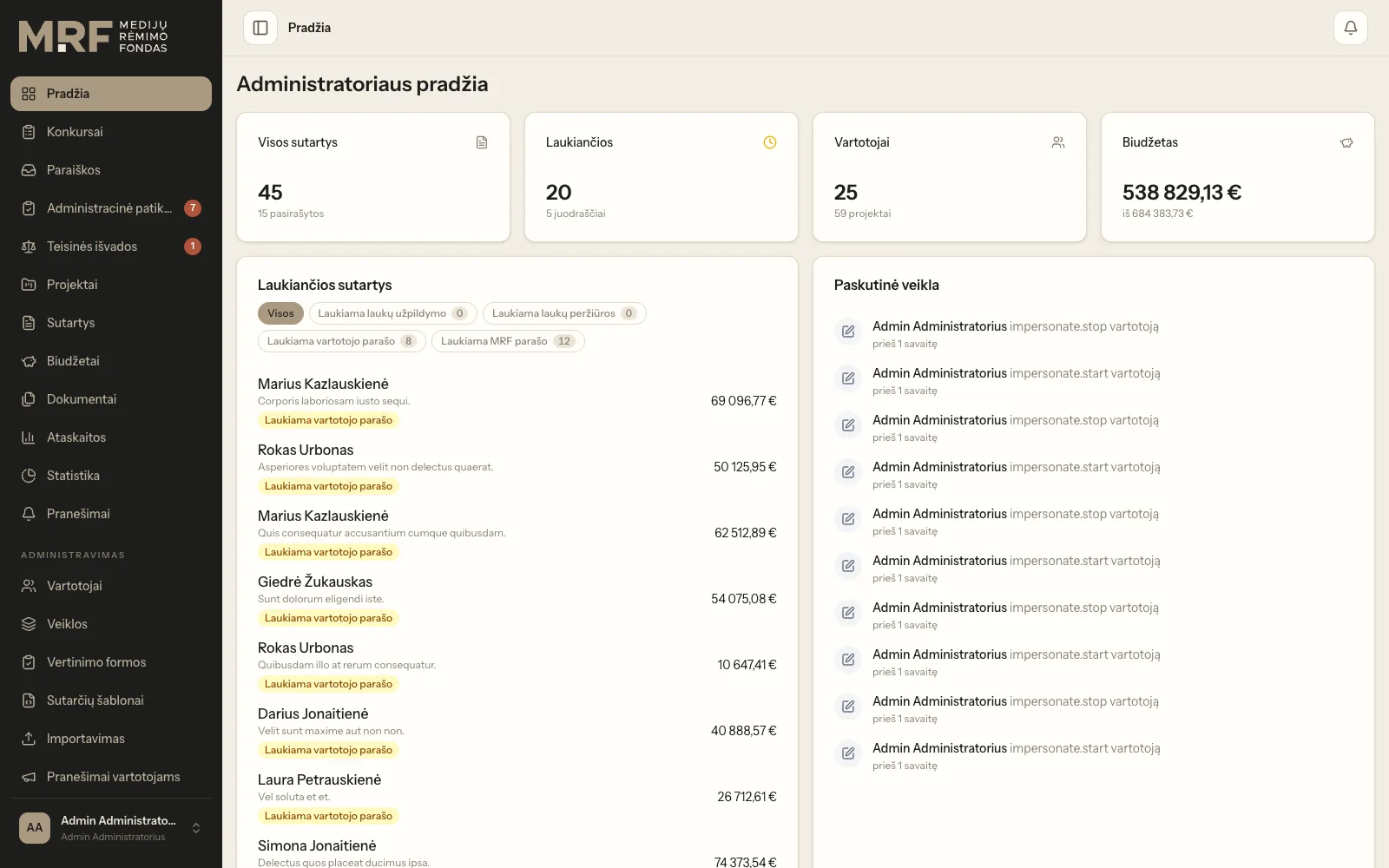
Application intake, expert assessment, budget approval and electronic contract signing in a single workflow.
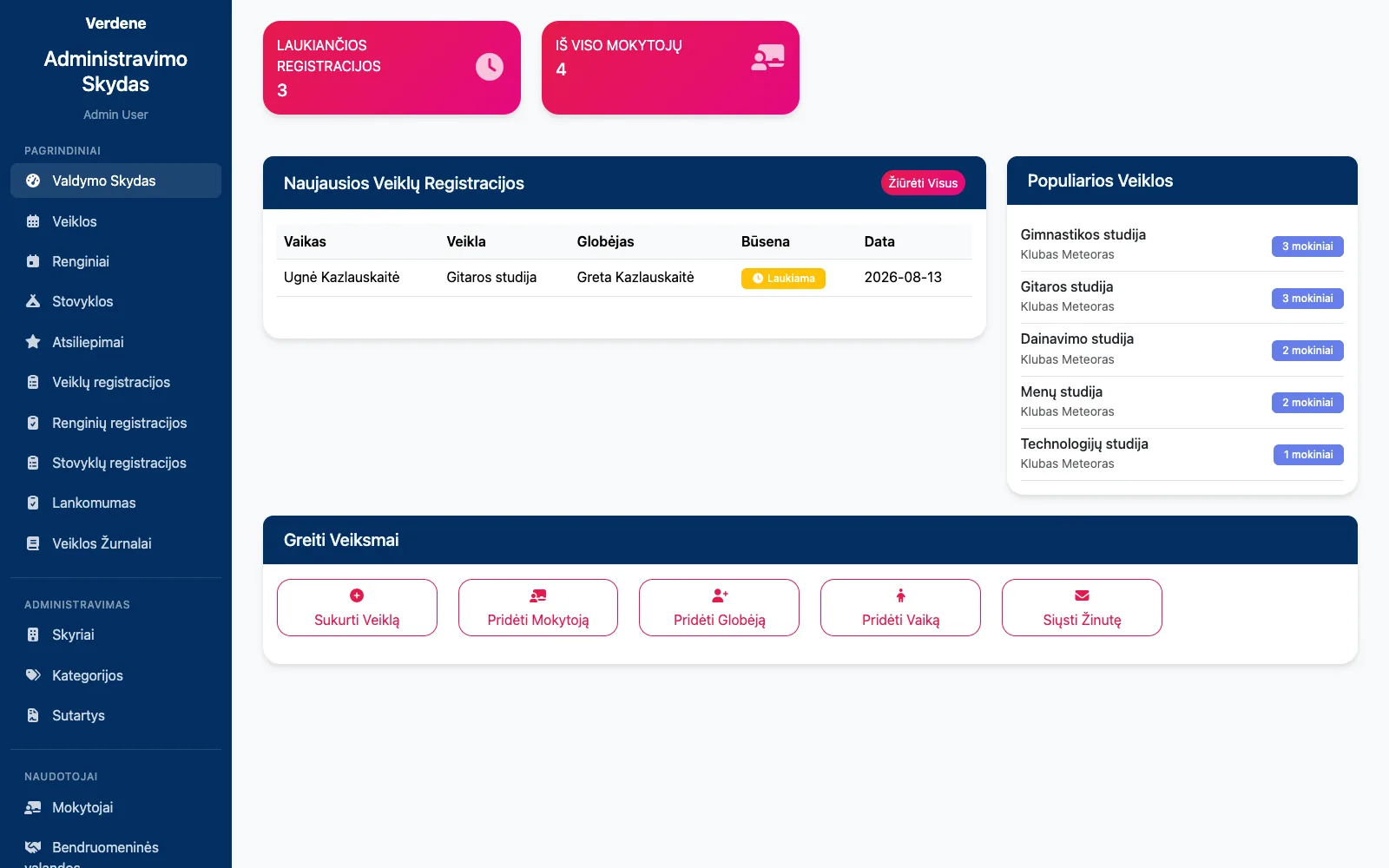
Club and camp registrations, attendance, contracts with parents and their termination in one system.
Tell us about the process that causes the most friction today. We will come back with questions within one business day.
Or directly: info@desamedia.lt · +370 686 59999