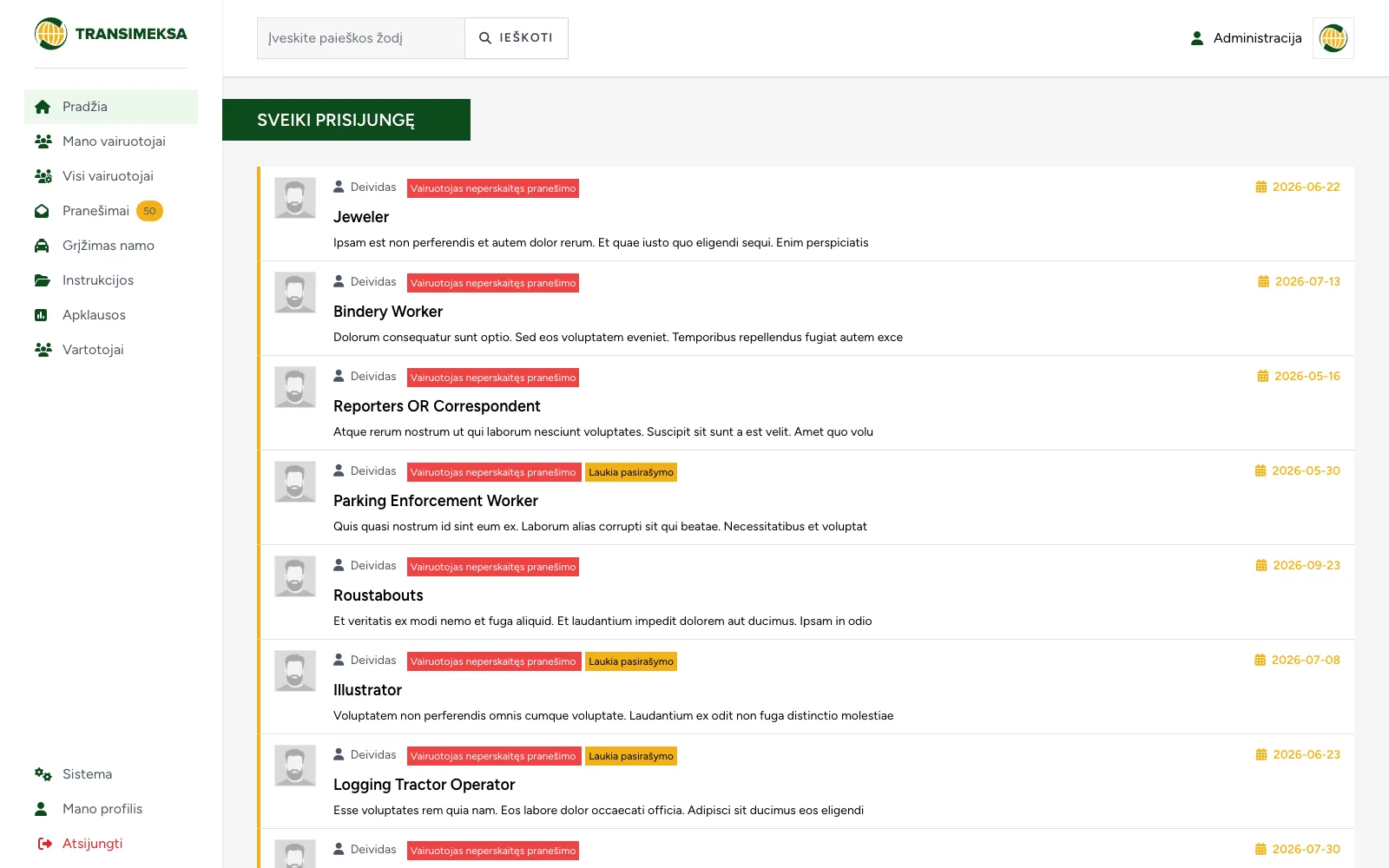
Driver communication and document management system
Instructions, documents and surveys for drivers, with a dedicated mobile interface for drivers and a separate one for managers.
An international job search platform with a CV database, monthly plans for employers and CV translation services.
ProblemRecruiting across European countries takes more than a job board: candidates care about accommodation, transport and language, and the revenue model cannot rely on a per-listing fee alone.
SolutionWe built a platform with location and distance search, a filterable CV database, monthly plans for employers, promoted listings and CVs, and a shop for CV services and market reports.
The platform connects skilled workers and employers across Europe. A driver from Lithuania looks for work in Sweden; a construction company in Germany looks for a welder. The site runs in English, because the two sides are often in different countries.
A standard job portal where you post a vacancy and receive CVs is not enough for this kind of work. Someone travelling to work in another country cares about the pay, but also about whether there will be somewhere to live, how to get to the site and which language they will need to speak.
First we worked out who pays for what. Employers need ongoing access, so a monthly plan suits them. Candidates usually buy a single service, such as a CV translation. Promotion to the top of a list is yet another separate purchase. We kept all three apart and did not mix them in one price list.
The conditions that decide whether someone will travel are entered as separate fields in the vacancy. Accommodation, transport, contract type and languages became search filters instead of being buried in the vacancy text.
Location search. Jobs can be searched by position, city or country, and by distance from 5 to 100+ km. A map shows the jobs and candidates in a particular city.
CV database for employers. Candidates can be filtered by experience, languages, driving licence categories, education and certificates. Names are hidden in the public list.
Employer plans. Each plan sets how many vacancies can be active at once and how many CVs can be viewed. There is also a separate plan for CV database access only, without vacancies.
Shop. Candidates can order CV writing, review or translation into another language. Employers can buy a market demand report by country.
Visibility and privacy. Employers can promote a vacancy to the top of the list, and candidates can promote their CV. By switching on private mode, a candidate can hide from their current employer.
Salary guide. Salaries are shown by sector and location, calculated from active vacancies.
When a platform has subscriptions, one-off purchases and promotions, a calculation error immediately becomes an accounting error. That is why we covered the payment logic with automated tests that run after every change.
It is worth choosing the pricing model before development starts. Moving later from a per-listing fee to subscriptions means reworking how the system stores data, not just changing the price list.
Instructions, documents and surveys for drivers, with a dedicated mobile interface for drivers and a separate one for managers.
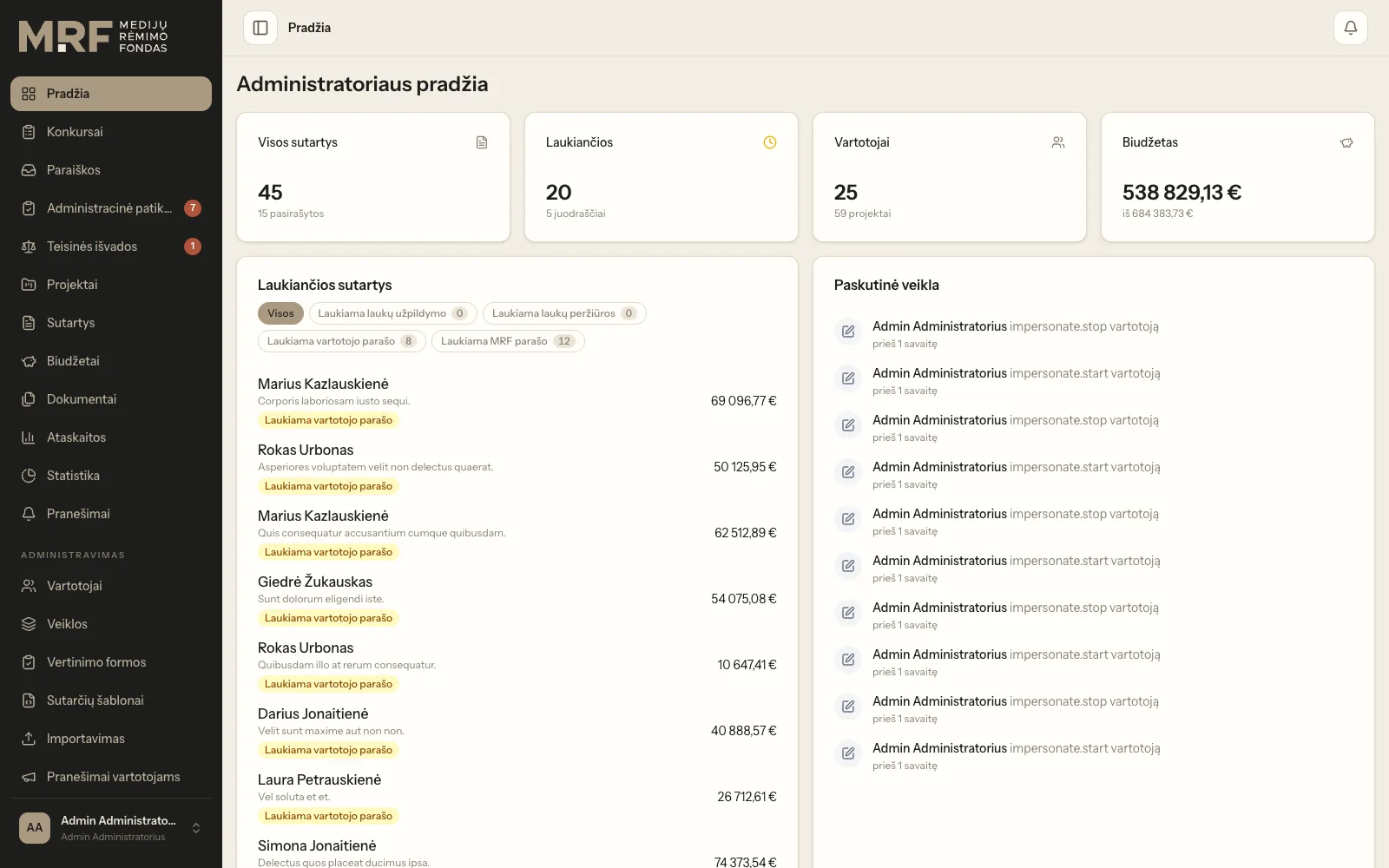
Application intake, expert assessment, budget approval and electronic contract signing in a single workflow.
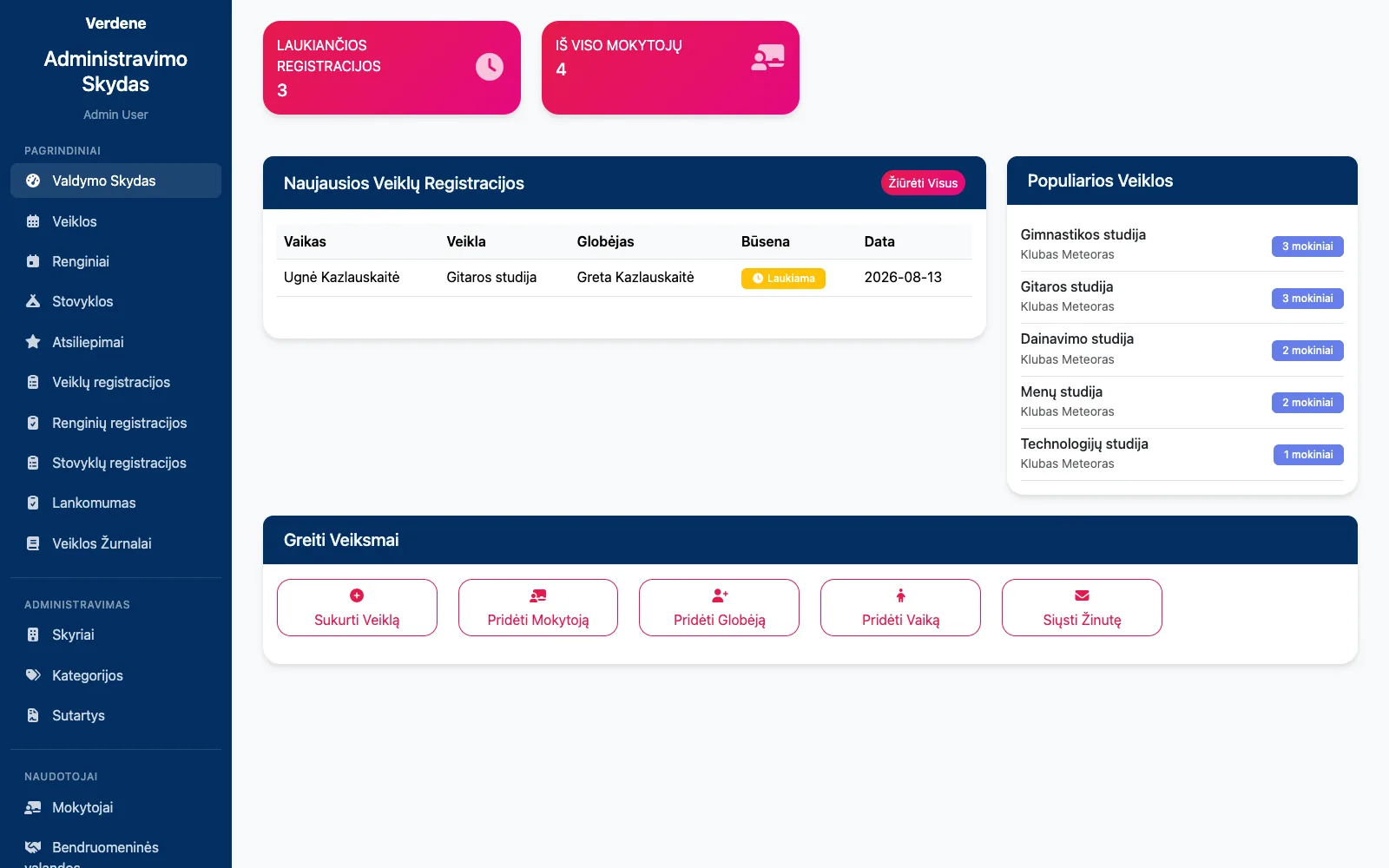
Club and camp registrations, attendance, contracts with parents and their termination in one system.
Tell us about the process that causes the most friction today. We will come back with questions within one business day.
Or directly: info@desamedia.lt · +370 686 59999